- Festival
- Nine nights, September or October
- Area
- Mumbai Central and Tardeo
- Dances
- Garba circles and dandiya raas
- Busy temples
- Mahalaxmi and Mumba Devi
The nine nights of Navratri
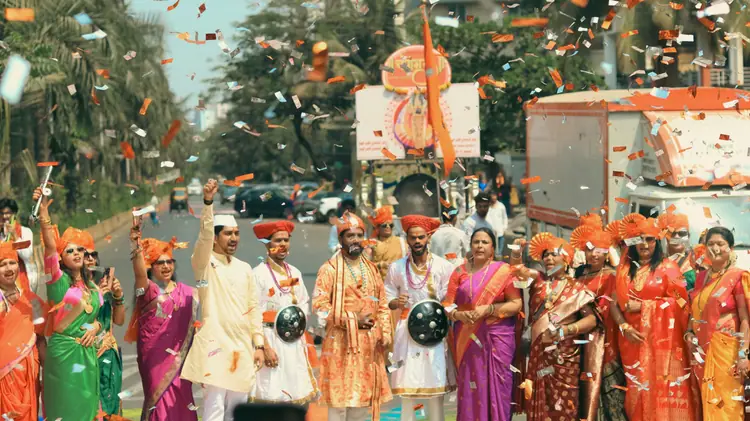
Navratri is nine nights in September or October, and the dates move with the Hindu calendar each year, so check the current year's dates before planning around them. The festival honours the goddess Durga in her many forms, and each region keeps it differently. In Mumbai the Gujarati and Marathi traditions sit side by side: Gujarati families dance garba late into the night, while many Maharashtrian households keep the quieter home ritual of the ghatasthapana, a pot and a lamp set up for the nine days.
For the city the nine nights are also a social season. Housing societies set up small grounds, neighbourhood committees string lights across open plots, and community halls open their doors to dancers. The season ends with Dussehra, when effigies of Ravana are burnt in open grounds and families visit temples. Navratri is not a public holiday the way Diwali is, so most dancing happens after working hours, from late evening until well past midnight. Timings vary by ground, so check with the organisers.
Garba and dandiya raas
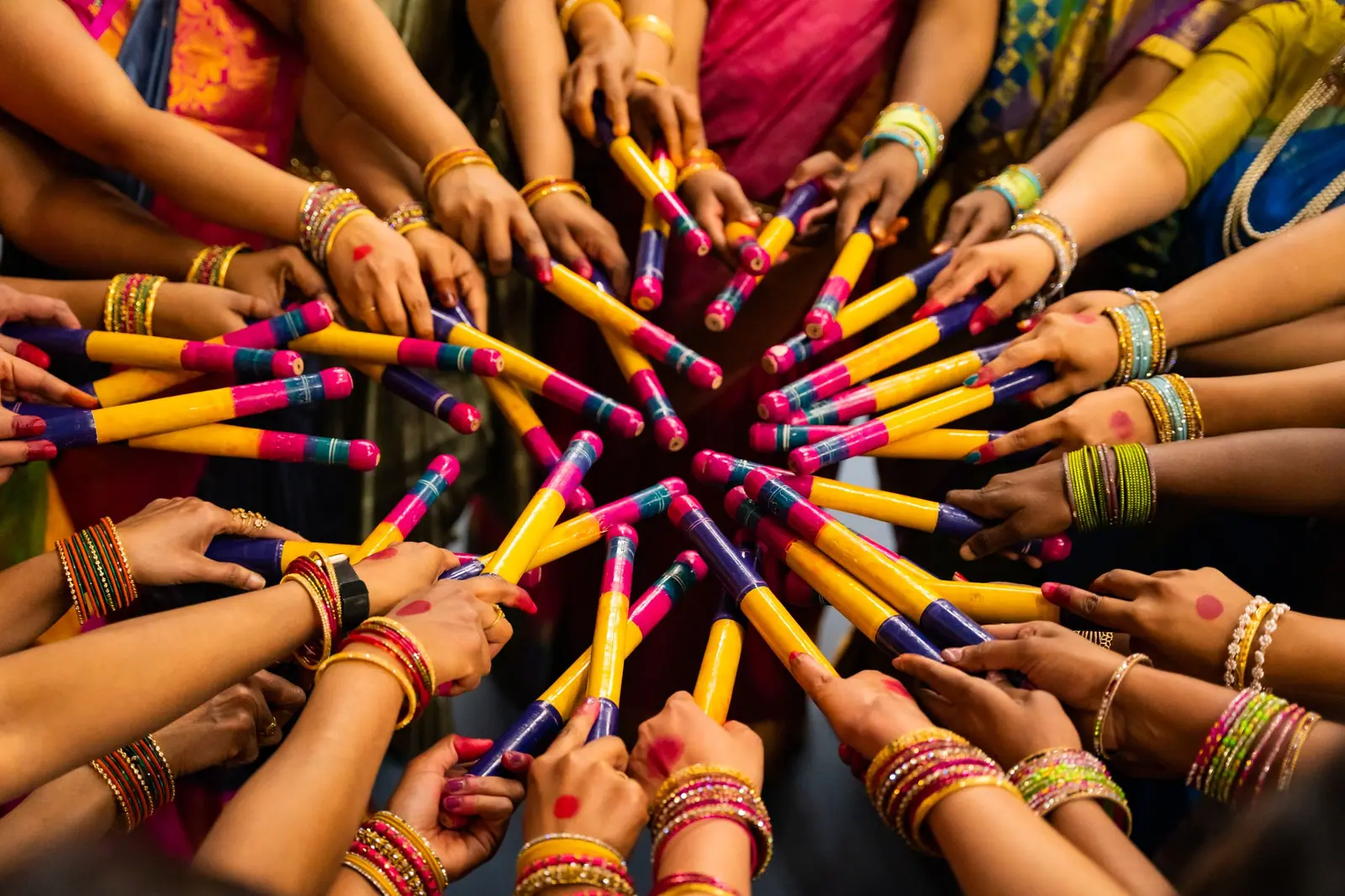
Garba is a circle dance from Gujarat, performed around a lamp or an image of the goddess. Dancers move in a ring with claps and simple steps, the circle turning slowly as more people join. Dandiya raas is played with a pair of sticks, each dancer striking the sticks of a partner as the lines meet and cross. Both are danced to live or recorded music, and both can be picked up by watching a few rounds from the edge.
The songs are usually Gujarati folk or devotional, starting slow and building to a fast section. Many grounds run a short teaching round early in the evening, before the floor fills, and that is the easiest hour for a beginner. Footwork matters less than keeping time. If you lose the step, step out, watch a full circle and join again near the edge. Nobody keeps score, and nobody expects a visitor to know the sequence.
Where the city dances
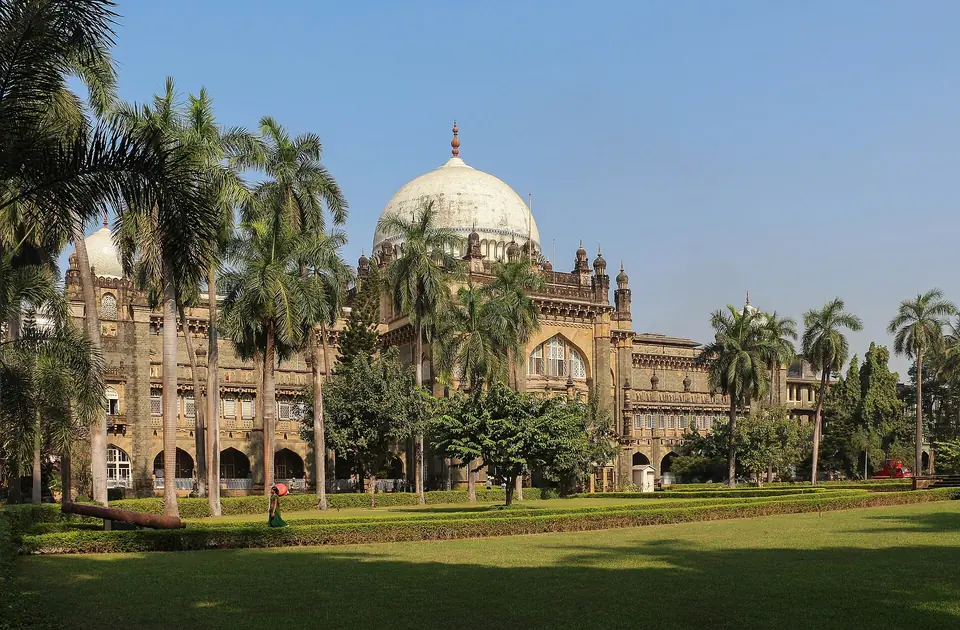
Garba nights are spread right across Mumbai. The island city's dance floors sit mostly in halls, clubs and college grounds, while the largest open-air grounds are further out in the western and central suburbs. Around Mumbai Central and Tardeo the halls are smaller and fill early, often with a neighbourhood crowd that has been coming for years. Most nights are run by cultural associations, housing societies or festival committees rather than by any single organiser. Look for posters in the weeks before the festival, and ask where you are staying.
A typical night is either ticketed or open to members, with a pass that covers all nine evenings. Entry arrangements change from year to year, so confirm with the organisers rather than relying on older advice. Crowds build after nine in the evening and thin out after midnight. Some grounds keep the first evening quieter, which suits a first attempt. Dress is festive rather than formal, and a light shawl helps once the sea breeze comes in. Expect a queue at the gate and a bag check.
- Community halls around Tardeo and Mumbai Central hold smaller nights that fill early.
- Large open grounds in the western suburbs draw the biggest circles and the live music.
- Housing society compounds in Girgaon and Dadar keep informal, family-friendly sessions.
- Neighbourhood cultural associations advertise their nights on posters and local noticeboards.
The goddess temples
Navratri is a temple festival before it is a dance. The Mahalaxmi Temple on Bhulabhai Desai Road, by the sea below Malabar Hill, is at its busiest during these nine nights, and the queue can run a long way down the approach. Mumba Devi Temple in Bhuleshwar, the shrine of the goddess from whom the city's name is traditionally derived, is also crowded. Both are within easy reach of Mumbai Central and Tardeo, and both are best visited early.
At the temples the ritual is plain. A lamp stays lit for the nine days, the image of the goddess is decorated afresh each night, and worshippers offer flowers and coconuts. Priests chant verses to the Devi, and the air carries the smell of camphor and marigold. Dress modestly, leave your shoes at the stand, and follow what the people around you do. Photography inside the sanctum is usually not allowed. The last three nights, Ashtami and Navami, are the most crowded of all. Check opening hours before setting out.
Joining as a visitor
Visitors are welcome at most public garba nights. Wear clothes you can move in: a kurta, a salwar kameez, a chaniya choli or a simple tunic over trousers. Shoes come off at the edge of the floor, so slip-ons are easier than laces. Carry water. Ask before joining a circle that is clearly part of a private function, and stay on the outer ring until the steps feel familiar. Many organisers set aside a corner for beginners and children in the early evening.
The circle has a logic worth learning. The ring usually moves in one direction, partners face each other for dandiya, and the beat guides the turn. Watch a full round before stepping in, then join at the edge where there is space. Children dance beside grandparents, so speed is not a virtue. Clap on the beat, keep the circle moving, and let experienced dancers pass on the inside. If a family invites you to their own celebration, a small box of sweets is a gracious thank you.
- Wear a kurta, salwar kameez or chaniya choli; comfortable cotton suits the warm nights.
- Carry a bottle of water and a cloth bag for your shoes at the edge of the floor.
- Learn two or three basic steps beforehand from a video or a friend.
- Ask before photographing dancers, since many circles are family gatherings.
Practical notes for the nights
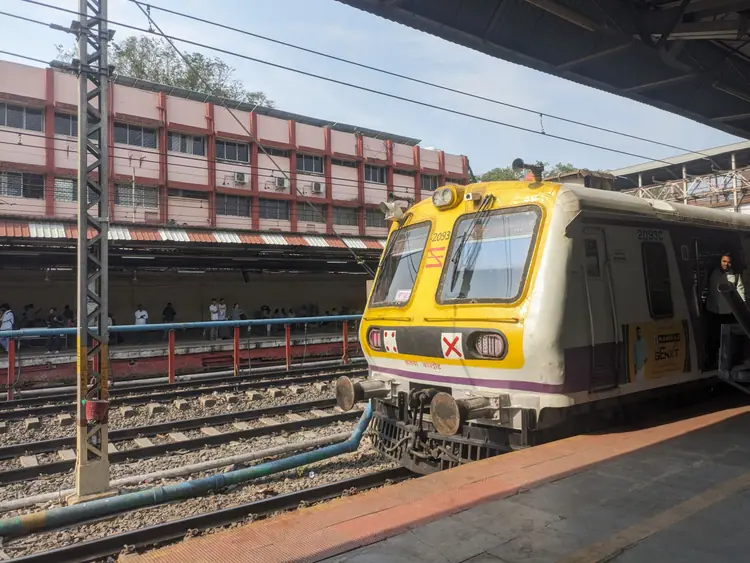
The nights run late and the roads around the big grounds fill quickly. Public transport is usually easier than driving. The suburban railway and the Metro both run into the night, but the last services are worth checking on the day, and new metro lines and stations keep opening. If a ground sits far from a station, agree on a pick-up point away from the main gate, where the crowd is thinner. Nights stay warm and humid, so light cotton and a hand fan help.
Food is part of the season. Most dancers eat before they arrive, and stalls outside the grounds sell snacks until the crowd goes home. Gujarati households keep farali, fasting food made without grain, so the table may hold moraiyo, rajgira and sama in place of rice, along with sabudana. Tea stalls stay open late. Keep some cash as well as phone payments, since queues at card machines are slow when the ground is full. The final nights draw the biggest crowds of the season.
Editorial review: 16 November 2026 · imptmumbai.in, written with AI assistance (see the editorial policy).