- Lines
- Western, Central, Harbour
- Tickets
- UTS app or counter
- Avoid
- 8–11 am, 5–9 pm
- Classes
- Second, first, AC
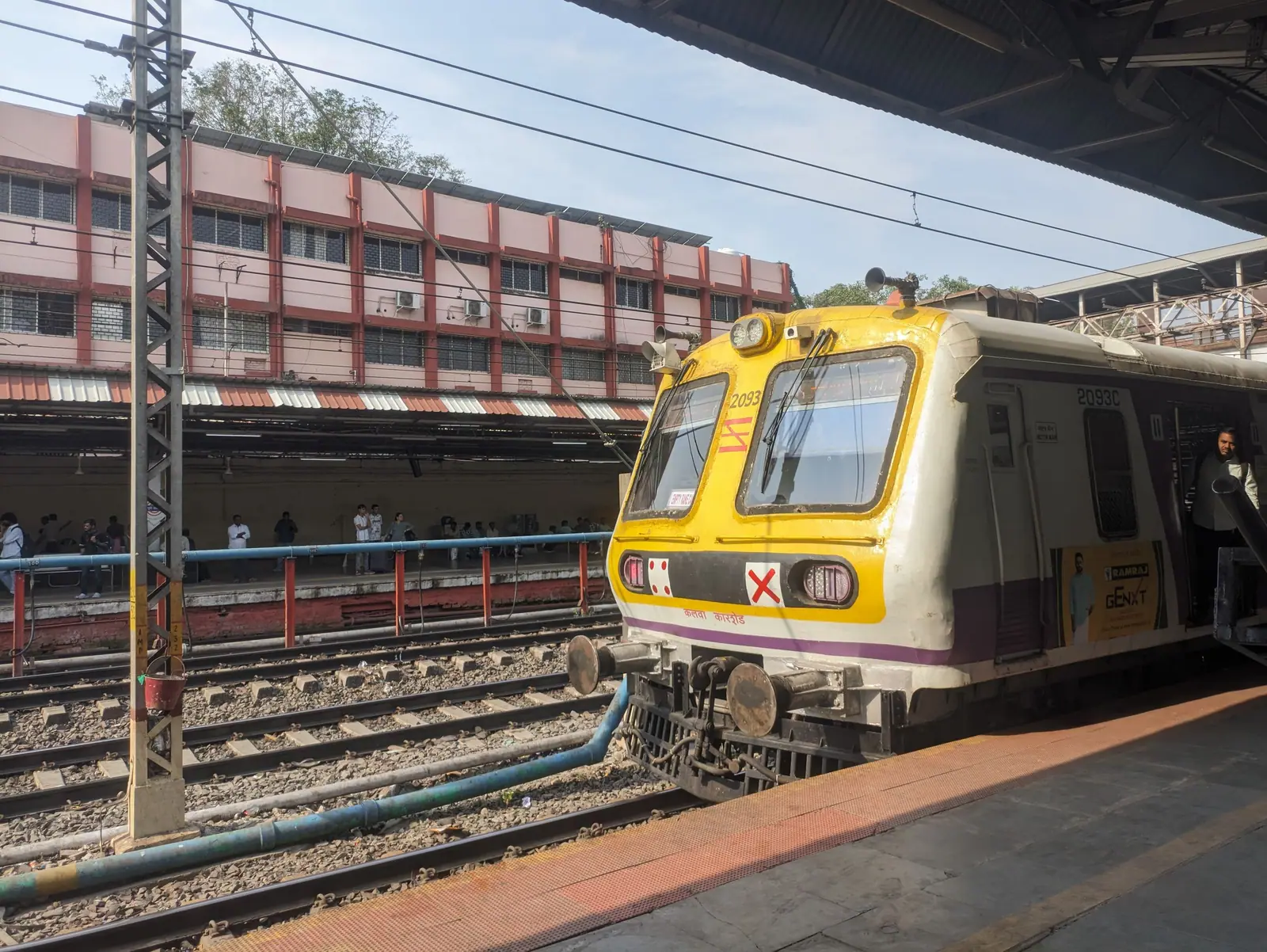
Mumbai’s suburban railway is the backbone of the city, running north–south along its length and carrying several million passengers every day. For visitors it is the fastest way to travel between South Mumbai and the suburbs — Churchgate to Bandra takes about 25 minutes, compared with an hour or more by road at busy times.
The three lines
- Western line: from Churchgate along the west coast via Marine Lines, Mumbai Central, Dadar, Bandra, Andheri and Borivali.
- Central line: from CSMT via Byculla, Dadar and Ghatkopar towards Thane and beyond.
- Harbour line: from CSMT across to Navi Mumbai, with a branch to Bandra and Andheri.
Tickets
Buy a ticket before boarding at a station counter, a ticket vending machine or through the official UTS mobile app. Fares are very cheap. First class costs more but is far less crowded, and air-conditioned trains run on some routes. Keep your ticket — inspectors do check, and fines apply.
Staying safe and comfortable
- Avoid peak hours, roughly 8–11 am southbound and 5–9 pm northbound, when trains are packed beyond belief.
- Stand well back from the open doors; never ride on the steps.
- Women can use the ladies’ compartments, marked on the platform and the train.
- Fast trains skip many stations — check the indicator boards for ‘F’ (fast) or ‘S’ (slow).
- Get to the door a station before yours; exiting at a busy stop takes effort.
Fast, slow and stopping patterns
Mumbai local trains are marked slow or fast, and the difference matters more than the label suggests. A slow train stops at every station on its line; a fast train skips the smaller stops and is useful for longer hops, such as Churchgate to Andheri or CSMT to Thane. Platform boards and the front of the train show where it terminates, so read the destination before boarding. Ask station staff if a fast train stops at your station, because patterns change.
On the Western line, fast trains tend to serve the main stations between Churchgate and Borivali and beyond; on the Central line they link CSMT with Dadar, Kurla, Ghatkopar and Thane before carrying on. The Harbour line works differently, with a branch that curves through Bandra, Andheri and Goregaon. None of this is fixed: new stops and timetables appear, so check the current timetable with Western Railway or Central Railway before you rely on a particular service. Allow extra time at unfamiliar stations.
Etiquette on crowded coaches
Stand behind the yellow line until the train stops, then let passengers get off before you step in. Once aboard, move inside rather than blocking the doorway, and keep a bag in front of you where you can see it. Offer seats to older travellers and to anyone who needs them. Doors close quickly and without much warning, so hold the handrail and keep children close. On the footboard, the risk is real and the rules exist for good reason.
Ladies' compartments and first class coaches exist on Mumbai local trains, and the markings on the platform and on the coach itself tell you where they stop. Queues form at the board marking each coach's position, and regulars know roughly where their seat will be. If you are unsure which coach to board, ask a member of station staff or a fellow passenger before the train arrives. Keep your ticket until you leave the station, since checks happen at both ends.
Editorial review: 16 November 2026 · imptmumbai.in, written with AI assistance (see the editorial policy).