- Area
- Byculla, south Mumbai
- Oldest museum
- Dr Bhau Daji Lad, founded 1855
- Easiest season
- November to February
- Closed days
- vary, check before you go
Start in Byculla
Byculla holds the city's oldest museum, Dr Bhau Daji Lad, founded in 1855 and opened in its present building in 1872. The scale suits children. One circuit of galleries covers models of old Bombay, painted clay figures, decorative objects and a richly finished interior that rewards looking up. There is no long march between rooms and no wing that has to be skipped. An entry fee applies, so check current timings and closed days before you go.
Rani Baug, the garden and zoo around the museum, is the reason Byculla works as a family morning. Children can move between cases and open ground, which keeps energy steady. Byculla station on the Central line is close, and taxis and app cabs drop at the gate. Come early, when the light is soft and the paths are quiet, and leave before the heat builds. Check the museum's closed days and the garden's hours before you go, since they do not always match.
- The models and painted clay figures of old Bombay trades hold attention longer than the labels
- The building itself rewards a slow walk, with columns, arches and a decorated interior
- The zoo and botanical garden outside allow a run between two spells indoors
- Weekday mornings are quieter than weekends, school holidays and festival days
Plan one museum a day
The museums that suit children sit far apart: Byculla in the south-east, Kala Ghoda in the Fort, Worli on the western shore. Treat each as a half-day outing rather than trying to link all three. Two stops work only when they are a short walk apart, as at Kala Ghoda. Mornings are cooler and galleries emptier, and a proper sit-down meal in the middle settles everyone before the next move. New metro lines and stations keep opening, so check the current network before choosing a route.
Weather decides more than any list. March to May is hot and very humid, so plan indoor time for late morning and shade for the rest. The south-west monsoon arrives around early to mid June and lasts to about late September, with flooded roads and slow trains; check the forecast before you set out. November to February is the easiest season for a museum day with children, and the walk between stops is pleasant too.
The Vastu Sangrahalaya at Kala Ghoda
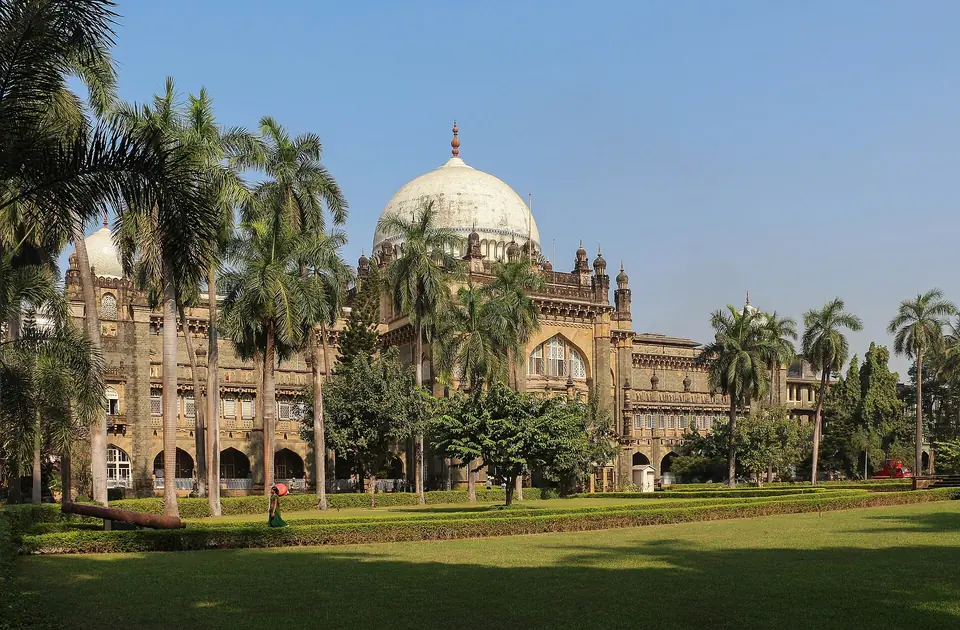
Chhatrapati Shivaji Maharaj Vastu Sangrahalaya opened in 1922 in the building that began as the Prince of Wales Museum. Its galleries run through sculpture, painting, decorative arts and natural history, and the domed entrance hall alone is worth the stop. Children often take to the sculpture and the animal cases first. Choose two or three rooms rather than the whole building, and let the visit end while everyone is still enjoying it. An entry fee applies and closed days vary, so check before you go.
Kala Ghoda makes the rest of the morning easy. The Jehangir Art Gallery, opened in 1952, is next door and small enough for a short look. The Asiatic Society Town Hall at Horniman Circle dates from 1833, Flora Fountain was erected in 1864, and the Oval Maidan gives children somewhere to run. The Victorian Gothic and Art Deco buildings around the maidan form part of a UNESCO World Heritage Site listed in 2018, which is easier to explain outdoors than in a book.
Science in Worli
The Nehru Science Centre at Worli takes the opposite approach: exhibits invite touching, pulling and pressing, and an outdoor science park breaks up the rooms. Children who lose interest in glass cases usually regain it here. The Nehru Planetarium is in Worli too, and a show gives the outing a fixed point to aim at. Check show times and opening days before you travel across the city. An entry fee applies at both.
Worli is a long way from Byculla and from the Fort, so give it its own half day. The sea face and the walk towards Haji Ali Dargah, a mosque and tomb on an islet built in 1431, make a good late afternoon. The causeway to the dargah is covered at high tide, so check tide timings before you set off. Combine the science centre, a snack and the waterfront rather than adding another museum.
- Hands-on exhibits reward touching and pressing, which suits children who tire of cases
- The outdoor science park gives a break between two spells indoors
- A planetarium show gives the outing a fixed time to plan around, so check schedules
- The sea face and Haji Ali causeway suit a late-afternoon walk after the museum
Art with young eyes
The Jehangir Art Gallery at Kala Ghoda opened in 1952 and holds changing exhibitions, so there is always something new and never a permanent collection to work through. That suits children. A single room of pictures is enough for one visit, and leaving early is fine. Ask a child what a painting reminds them of before explaining what it is, and the visit turns into a conversation rather than a lesson.
The Kala Ghoda Arts Festival takes place every February, with the streets around the gallery given over to installations, music and stalls. Dates move each year, so check before planning a trip around it. Outside festival time the area is still easy on foot: the bylanes hold old buildings and quiet corners, and the whole circuit from the gallery to the Oval Maidan is short enough for tired legs, with a snack stop in the middle.
Outdoors when galleries tire
Sanjay Gandhi National Park at Borivali covers about 100 sq km inside the city's northern limits, with the Tulsi and Vihar lakes and the Buddhist Kanheri caves, carved from about the 1st century BCE to the 10th century CE. It is not a museum, but it does more for a tired child than a fourth gallery. The journey north takes time, so treat the park as a day in itself and start early.
Closer to the southern museums, the Global Vipassana Pagoda at Gorai was inaugurated in 2009 and holds a large meditation hall under its dome. It is free to visit, though hours vary, and the quiet suits some children and not others. The city's beaches, from Girgaon Chowpatty to Juhu and Marve, are the simplest end to any museum morning and need nothing more than a walk. Swimming is unsafe at most of them, especially during the monsoon.
Editorial review: 16 November 2026 · imptmumbai.in, written with AI assistance (see the editorial policy).