- Area
- Fort, Kala Ghoda and Byculla
- Communities
- Baghdadi and Bene Israel
- Key sites
- Keneseth Eliyahoo, Magen David
- Getting there
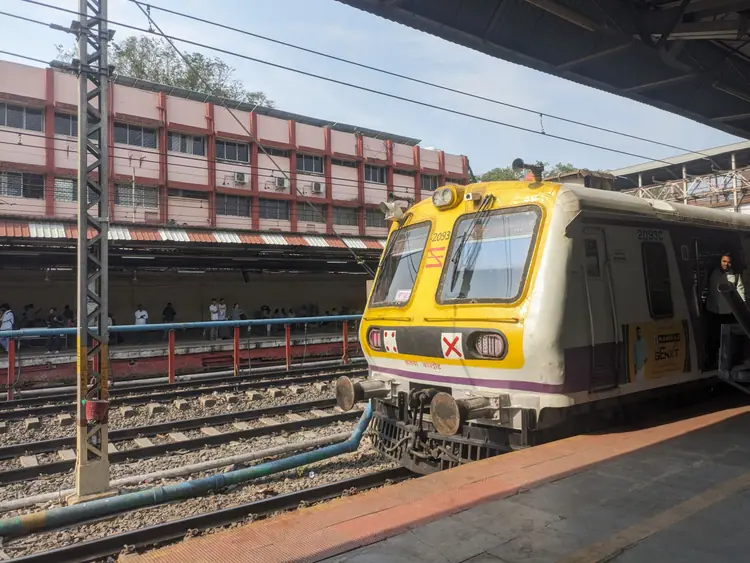
- Suburban trains to Churchgate and Byculla
Two communities, one city
Mumbai's Jewish heritage rests on two communities. Baghdadi Jews came from Baghdad and other Middle Eastern cities, many of them by way of Surat, and settled in Bombay in the nineteenth century. The Sassoon family became the most visible of them, building synagogues, docks and schools. Bene Israel tradition holds that their ancestors reached the Konkan coast by sea and lived for centuries in coastal villages before moving into the city. Together the two communities shaped the streets around Fort, Kala Ghoda and Byculla, and their buildings still stand there.
The trail links two synagogues: the Keneseth Eliyahoo in Kala Ghoda, built in 1884, and the Magen David in Byculla, which dates from 1864. Both are working places of worship rather than museums, so a visit fits around prayer. The route runs south to north, with a short taxi ride or train journey between the halves. The streets in between carry much of the story: the art district of Kala Ghoda, the Victorian and Art Deco buildings of the Fort, and the nineteenth century lanes of Byculla.
Keneseth Eliyahoo in Kala Ghoda
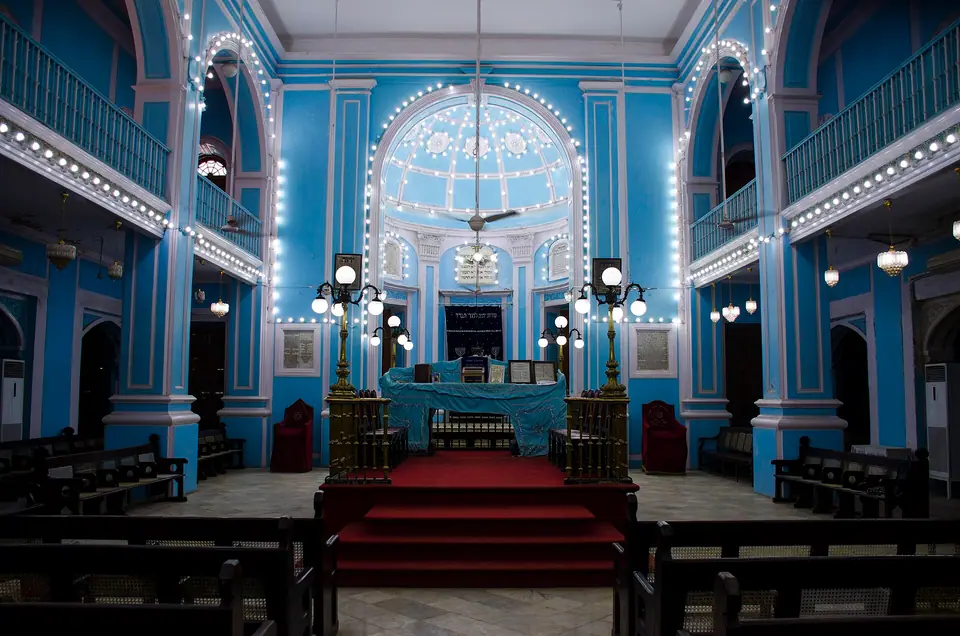
The Keneseth Eliyahoo Synagogue stands in a lane off Kala Ghoda, a short walk from the Jehangir Art Gallery and the Asiatic Society Town Hall. The Sassoon family built it in 1884 for the Baghdadi community that had settled in the Fort. Its blue exterior is easy to spot, and the building has been restored in recent years. Look at the facade and the gate before you go in, then step inside if the doors are open. The lane itself sits in the middle of the art district.
Inside, as in most synagogues of this kind, the plan is simple. The ark holds the Torah scrolls, a raised platform stands for reading, and seating faces the centre. Visitors are usually asked to keep voices low and to sit towards the back if a service is under way. Photography may be restricted during prayer, so ask at the door first. This is a Baghdadi foundation; Bene Israel congregations built their own synagogues in the city and in the Konkan towns to the south.
The Fort and Kala Ghoda circuit
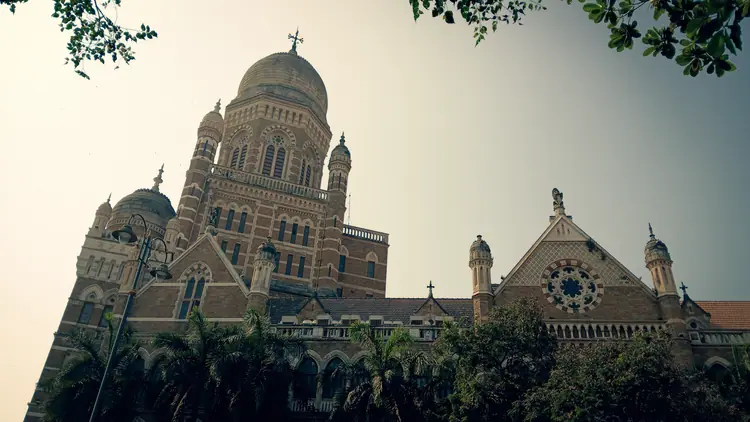
Kala Ghoda holds several landmarks within a few streets. The Chhatrapati Shivaji Maharaj Vastu Sangrahalaya opened here in 1922, and the Jehangir Art Gallery followed in 1952. A little south, the Asiatic Society Town Hall was completed in 1833, and Flora Fountain was erected in 1864 at Hutatma Chowk, the square that honours those killed in the Samyukta Maharashtra movement. The Rajabai Clock Tower, designed by George Gilbert Scott, was completed in 1878 and rises about 85 metres.
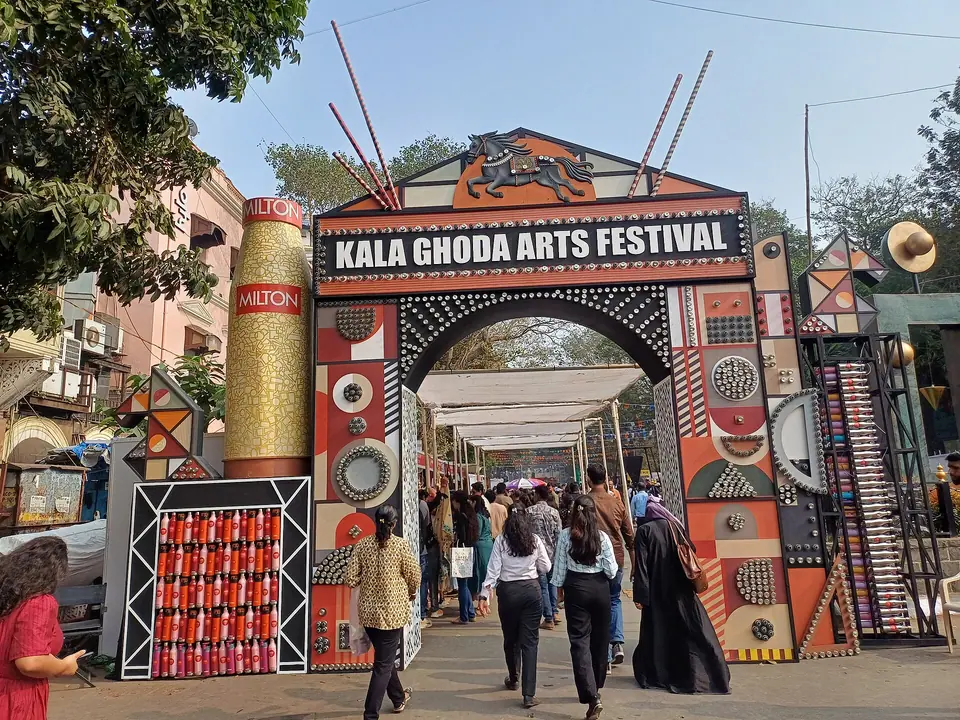
The wider Fort is a UNESCO World Heritage Site. The Victorian Gothic and Art Deco Ensembles of Mumbai were inscribed in 2018, taking in the Oval Maidan, the High Court, the University buildings and the Rajabai Clock Tower on one side, and the Art Deco blocks of Marine Drive and Backbay Reclamation on the other. Allow a morning to walk between them. Every February since 1999 the Kala Ghoda Arts Festival fills these streets with music, food and art; check the dates each year.
- See the museum at Kala Ghoda for sculpture, painting and a natural history collection.
- Cross to the Oval Maidan for the clearest view of the Gothic row against the seafront.
- Look up at the bas-reliefs on the Fort's older buildings, best in morning light.
- Wear shoes for walking, since pavements are uneven and crossings are busy.
Byculla and the Magen David
The Magen David Synagogue in Byculla dates from 1864 and was also built with Sassoon family support. Byculla was a favoured address in the nineteenth century, and the synagogue served the Baghdadi community that moved north from the Fort as the city grew. Bene Israel families, long settled in the old city, lived and worked in the lanes nearby. The building is a neighbourhood landmark; its facade is best seen from the street outside, and the interior follows the same simple plan as Kala Ghoda.
Byculla is on the Central line, a short ride from CSMT and Dadar. In the same neighbourhood, the Dr Bhau Daji Lad Museum sits in the grounds of Rani Baug, the city's zoo and botanical garden. The museum was founded in 1855 and its building opened in 1872, which makes it the oldest museum in Mumbai. Its collection follows the city's crafts, trade and communities, and it makes a quiet contrast to the streets.
Visiting with respect
Both synagogues are places of prayer, so dress modestly. Shoulders and knees covered is the safe standard for men and women. Men may be offered a head covering at the door, and women may be asked to cover their hair; follow the directions of those at the entrance. Security checks are common at Jewish sites in Mumbai, so carry identification and allow a few extra minutes at the gate. Photography is often restricted, particularly during services.
Shabbat runs from Friday evening to Saturday evening, when the synagogues are busiest. Visitors are often welcome outside prayer, but ask before entering, keep to the edges of the hall and keep phones silent. Weekday mornings are usually the easiest time to look around. If a service is under way, wait outside or return later; the streets around both buildings are interesting enough to fill the interval. People worship here all year, not only on the days when visitors call.
Add to the walk
Between the two synagogues, the old city offers more. Crawford Market, formally the Mahatma Jyotiba Phule Mandai, was completed in 1869, with bas-reliefs by John Lockwood Kipling on its facade. Chor Bazaar, around Mutton Street near Mohammed Ali Road, sells antiques, brass and old film posters, though most shops close on Fridays. In Colaba, Sassoon Dock was built in 1875 by the Sassoon family, and the Koli fishing boats land their catch there at dawn; photography may be restricted, so ask.
Food is part of the walk. In the Fort, Parsi dishes such as dhansak, patra ni machhi and akuri are served in old Irani cafés, with chai and bun maska through the day. Maharashtrian snacks, vada pav, misal pav and kanda poha, are easy to find, and cutting chai, half a glass, is the standard pause. Mohammed Ali Road adds Bohri and Muslim cooking, especially on Ramzan nights. Check festival dates each year, because the streets change rhythm with them.
- Start early in Kala Ghoda, when the art district is quiet and the light is soft.
- Keep a light scarf in your bag for head covering at the door and for the sun.
- Travel between the halves by taxi, or take a train to Byculla and walk from the station.
- Carry some cash for small purchases, though UPI is accepted almost everywhere.
Where the trail sits in your trip
This is a half-day route that fits easily into a longer stay in the Fort and Kala Ghoda, the area most first-time visitors use as a base. Pair it with a morning at the museums and a slow lunch, then take the train north in the afternoon. Families with younger children may prefer to split it across two days, with the Fort on one and Byculla on the other, since both halves involve time on foot.
November to February is the most comfortable season, with warm days and cooler evenings. March to May is hot and humid, and the south-west monsoon, roughly June to late September, brings heavy rain and flooded roads; dates vary each year. October stays hot after the rains. Whatever the month, mornings are cooler and the synagogues are quieter, and a weekday gives you more room to look around.
Editorial review: 16 November 2026 · imptmumbai.in, written with AI assistance (see the editorial policy).