- Erected
- 1864
- Location
- Hutatma Chowk, Fort
- Nearest station
- Churchgate
- Also known for
- Samyukta Maharashtra memorial
What the fountain is
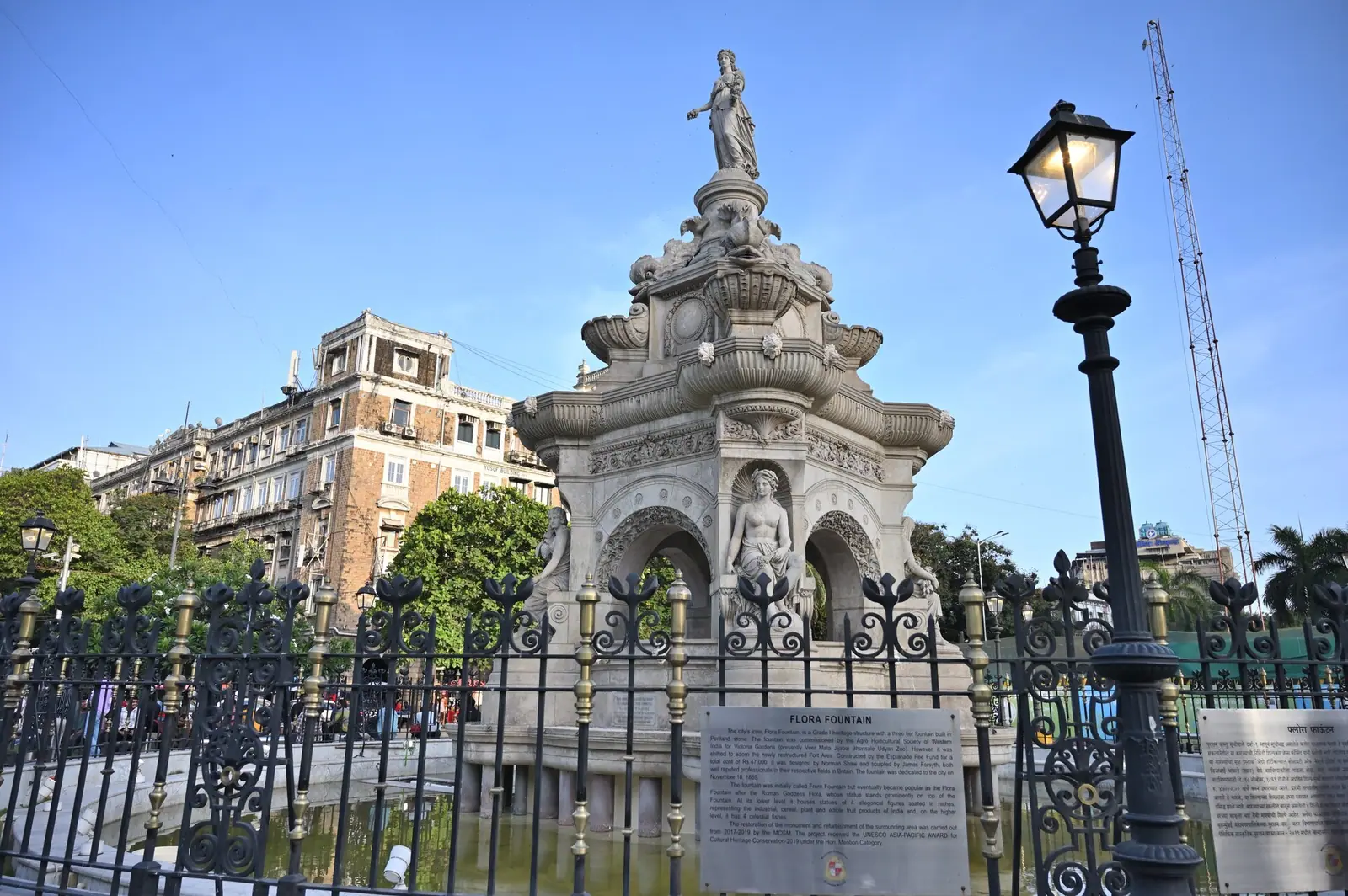
Flora Fountain is a stone fountain standing in the middle of a busy crossroads in the Fort district of south Mumbai. It was erected in 1864 and takes its name from Flora, the Roman goddess of flowers and spring, whose figure crowns the structure. The square around it is Hutatma Chowk, a name that came later and honours those killed in the Samyukta Maharashtra movement of the 1950s.
The fountain is not a quiet garden piece. Traffic circulates around it through most of the day, and the stone is weathered by sea air and monsoon rain. What you see is a piece of Victorian-era civic design, carved rather than cast, standing where several of the old city's main roads meet. It is free to look at from the pavement at any hour, and it works well as a landmark to orient yourself by.
The Samyukta Maharashtra story
The square's second name remembers a political movement rather than a colonial figure. In the 1950s, campaigners pressed for a Marathi-speaking state to be created with Bombay as its capital. The agitation was long and sometimes violent, and people were killed when police opened fire on demonstrators in the city. The demand was conceded when Maharashtra was formed in 1960, with Bombay, now Mumbai, as its capital.
A memorial stands at the square in memory of those killed, and the name Hutatma Chowk, meaning martyrs' square, was given in their honour. The change of name is a reminder that this crossroads carries two histories at once: the colonial civic ambition of the 1860s and the statehood struggle of the 1950s. Look for the memorial and its lettering as well as the fountain itself, since most visitors photograph only the stone figure.
- Flora, the Roman goddess of flowers and spring, crowns the fountain.
- The memorial at the square honours those killed in the statehood agitation.
- Maharashtra was created in 1960 with Bombay as its capital.
- The square's name means martyrs' square in Marathi.
What to see close up
Walk around the fountain's base and the carving rewards a slower look. The structure is ornamental in the Victorian manner, with figures and decorative detail worked into the stone, and the basin and pedestal carry their own mouldings. The surrounding streetscape is just as interesting: the crossroads sits among banks, offices, colleges and old commercial buildings, several of them from the same period as the fountain.
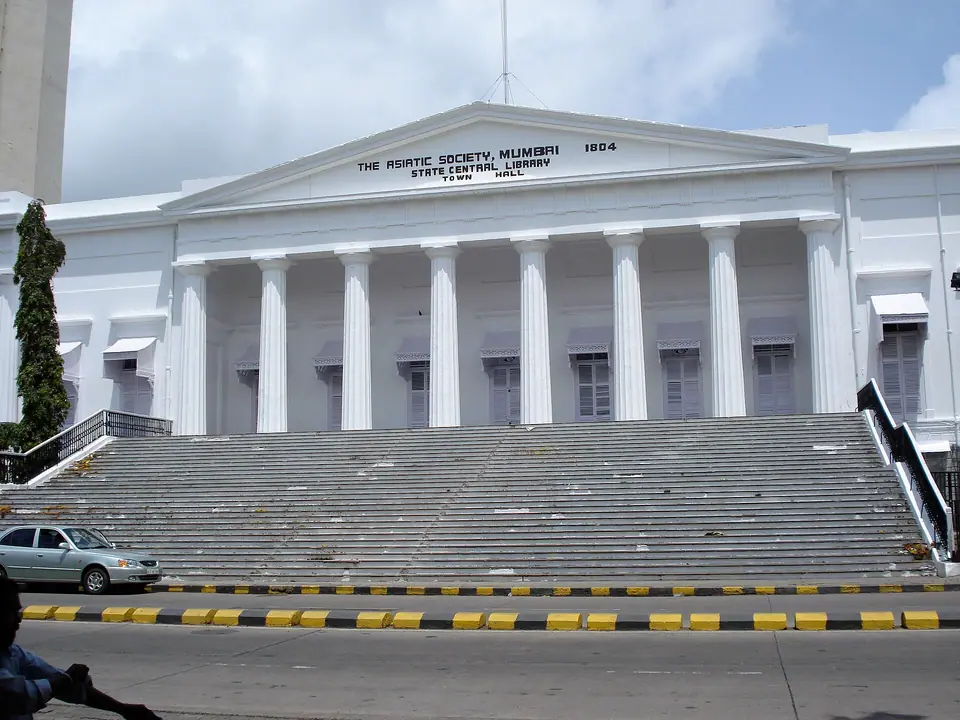
The square is a natural starting point for a walk rather than a destination on its own. Horniman Circle and the Asiatic Society Town Hall, completed in 1833, are a short walk away, and the Kala Ghoda art district begins a few minutes north. The whole area is dense with 19th-century public buildings, so keep the camera out as you move between them rather than spending a long time at the fountain.
Getting there and timing
The square is in the Fort district, with Churchgate the nearest suburban station on the Western line, roughly a kilometre and a half on foot. From the station, walk east and then north through the Fort streets, or take a short taxi ride. Black-and-yellow taxis and app cabs serve this part of the island city; autorickshaws do not operate south of Bandra and Sion. Several bus routes pass along the roads that meet at the square.
Allow about twenty minutes at the fountain itself and an hour or more if you combine it with Horniman Circle, the Town Hall and the Kala Ghoda museums. The square is public and open at all hours, so there is no closing time to plan around, though the surrounding buildings keep their own hours. The dry months from November to February are the most comfortable for walking this circuit; May and the monsoon months are humid or wet.
- Churchgate station on the Western line is the closest railhead.
- Taxis and app cabs serve Fort; autorickshaws do not run in the island city.
- Horniman Circle and the Town Hall are within a short walk.
- The Kala Ghoda museums and galleries are a few minutes north.
Nearby sights to pair
The Asiatic Society Town Hall at Horniman Circle, completed in 1833, is one of the finest neoclassical buildings in the city and sits a few minutes away. The circle itself is a curved crescent of buildings around a garden, a calm contrast to the traffic at the fountain. From there, the streets lead north to Kala Ghoda, where the Chhatrapati Shivaji Maharaj Vastu Sangrahalaya, opened in 1922, and the Jehangir Art Gallery, opened in 1952, anchor a day of looking.
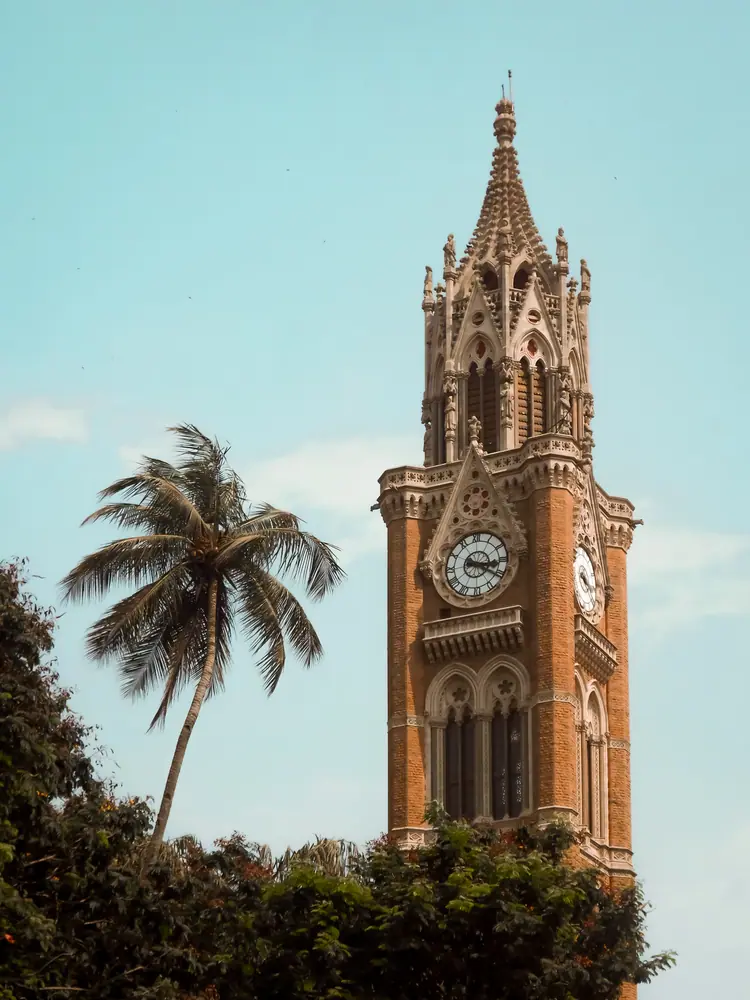
Continue west and the Victorian Gothic and Art Deco Ensembles, a UNESCO World Heritage Site since 2018, take in the High Court, the University buildings, the Rajabai Clock Tower and the seafront at Marine Drive. The clock tower, designed by George Gilbert Scott, was completed in 1878 and stands about 85 metres tall. All of this is walkable from the fountain, which makes the square a useful hinge for a Fort and Kala Ghoda day.
- Horniman Circle garden and the Town Hall are a few minutes away.
- The Chhatrapati Shivaji Maharaj Vastu Sangrahalaya is in Kala Ghoda.
- The Rajabai Clock Tower and High Court are part of the 2018 World Heritage listing.
- Marine Drive is a straightforward walk west from the Fort streets.
Practical tips for a visit
This is a working crossroads, so dress for a city street rather than a monument: comfortable shoes, light cotton in the hot months and a layer for December and January evenings. Carry water and something for the sun, since shade at the square is limited. Cross at the marked crossings and let the traffic clear rather than stepping out between vehicles. If you visit during the monsoon, expect wet pavements and spray from passing cars.
Photography from the pavement is straightforward and no permission is needed for the public square. Do not step into the road for a better angle, and ask before photographing people, especially stallholders and office workers going about their day. Crowds build through the working day and peak in the evening. Weekday mornings are the calmest. Carry some cash for small purchases, since phone payments are common but not universal at street stalls.
Where to stay nearby
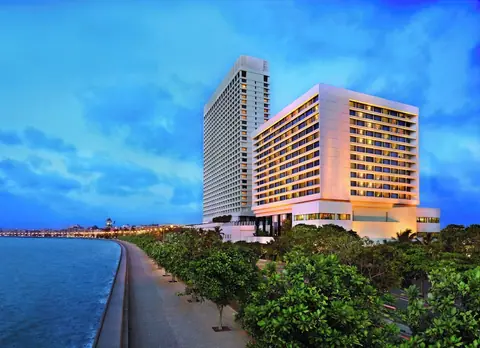
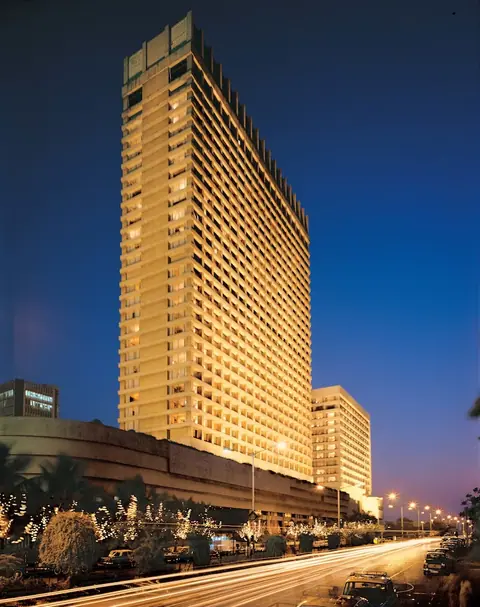
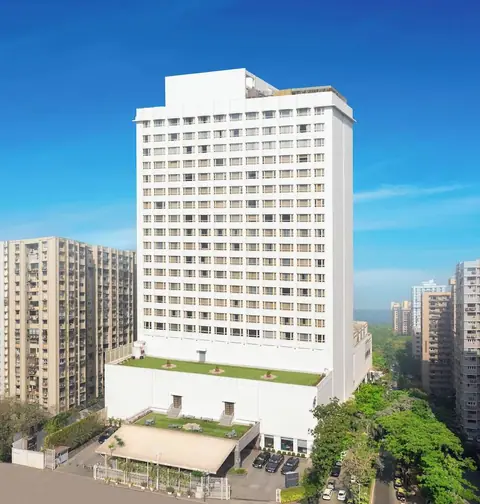
Fort and Kala Ghoda suit visitors who want to walk to the old city's sights. The area has a mix of long-established city hotels and smaller places tucked into the lanes, with the museums, the High Court and the waterfront all within reach on foot. Staying here puts the 19th-century streetscape on the doorstep, and Churchgate station gives a direct line to the western suburbs and the airport road beyond.
Marine Drive and Churchgate, about a kilometre and a half west, offer the seafront instead of the commercial lanes, with the sweep of the bay and the Art Deco frontage as the setting. Colaba, further south, has the densest cluster of places to stay and the Gateway of India. All three areas are convenient for the fountain; choose Fort for walking, Marine Drive for the sea and Colaba for the evenings.
Editorial review: 16 November 2026 · imptmumbai.in, written with AI assistance (see the editorial policy).