- Dates
- February, dates move each year
- Duration
- Nine days
- Setting
- Kala Ghoda and Fort streets
- Nearest rail
- CSMT and Churchgate
Nine days in February
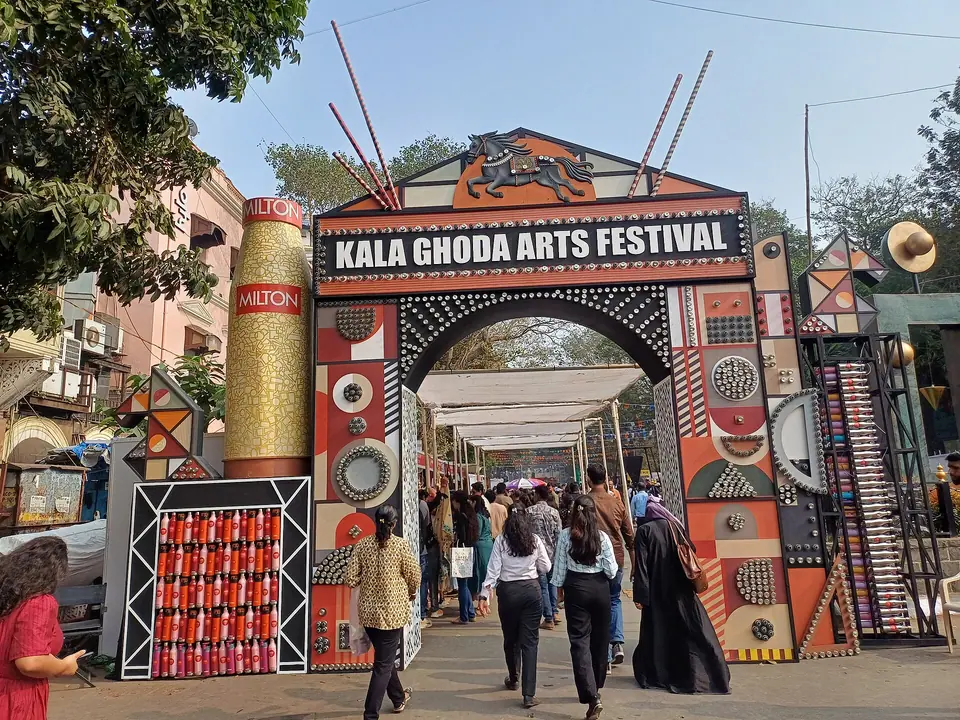
The Kala Ghoda Arts Festival has run every February since 1999, which makes it one of the city's established street festivals. For nine days the lanes between the Jehangir Art Gallery and the Oval Maidan fill with installations, stages, stalls and crowds. The festival is a mix of visual art, music, dance, theatre, literature and walks, and much of it happens outdoors where anyone can stop and watch. Dates move with the calendar each year, so check the festival programme and the local press before you plan a trip.
The name is older than the festival. Kala Ghoda means black horse, and the precinct takes its name from the dark horse statue at the crossing of the same name. That small piece of civic sculpture gave the district an identity long before the first stage went up. Today the same crossing is the festival's centre of gravity, with stages, stalls and installations clustered around it, and the short walk between the art gallery, the museum and the maidan becomes the spine of a day out.
The precinct around it
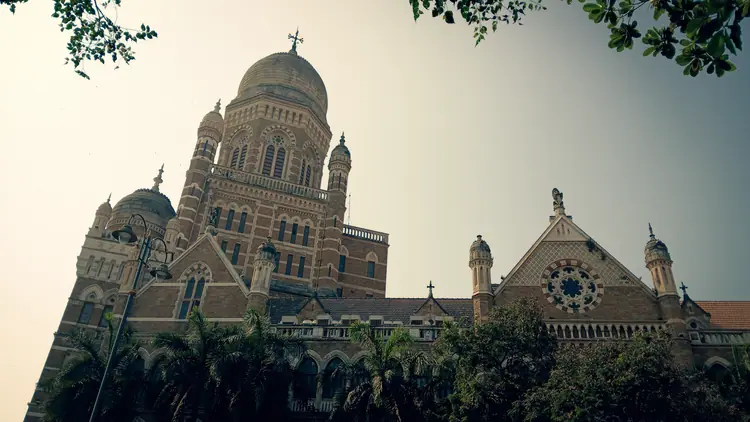
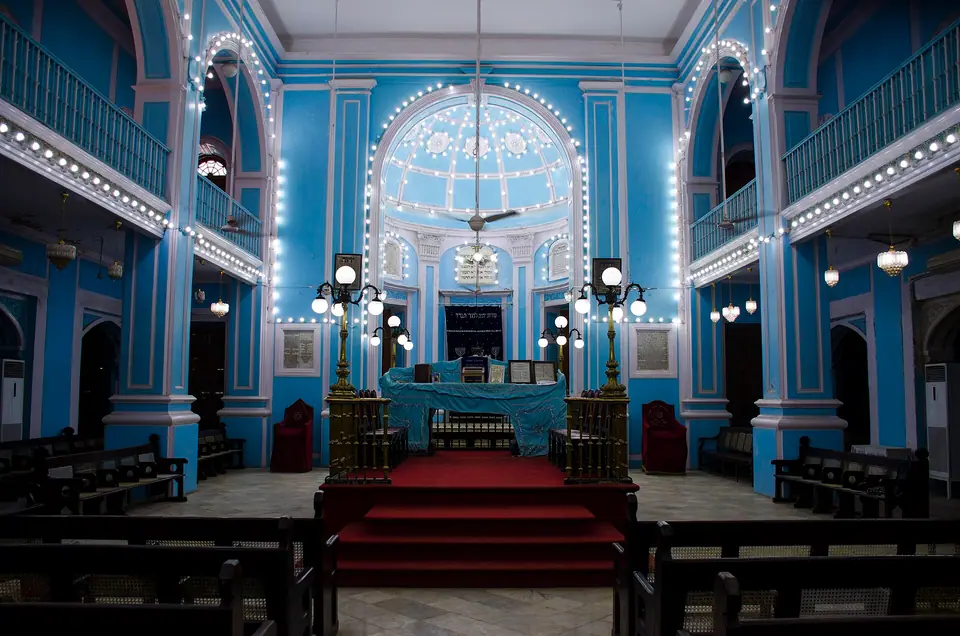
Kala Ghoda rewards a slow look between events. The Chhatrapati Shivaji Maharaj Vastu Sangrahalaya, the city's main art and history museum, opened here in 1922 behind a domed Indo-Saracenic facade. Next door, the Jehangir Art Gallery has shown contemporary work since 1952. A few steps away stands the Keneseth Eliyahoo Synagogue, built in 1884 by the Sassoon family and still in use. Flora Fountain, erected in 1864, marks Hutatma Chowk, named for those killed in the Samyukta Maharashtra movement.
Walk south and the streets widen into the Victorian Gothic and Art Deco Ensembles, a UNESCO World Heritage Site since 2018. The High Court, the University buildings and the Rajabai Clock Tower, completed in 1878 and about 85 m tall, face the Oval Maidan; the Art Deco blocks of Marine Drive and Backbay lie beyond. Chhatrapati Shivaji Maharaj Terminus, a World Heritage Site since 2004, is a short ride or a longer walk east. Horniman Circle and the Asiatic Society Town Hall, completed in 1833, sit to the south.
A walking route through the day
Start at the crossing itself, where the street installations are densest, and work outward. Mornings are calmer: good for photographs, for reading the labels on installations and for getting into the museum or gallery before queues build. Afternoon brings the talks, workshops and children's sessions, most of them indoors or under cover. Evenings are busiest, when music and dance take over the outdoor stages and the lanes fill with families. The programme changes daily, so pick up a schedule or check the festival's listings before setting out.
A sensible loop runs from the crossing out to Horniman Circle and the Asiatic Society Town Hall, west along the Oval Maidan, then back through the museum gardens to the gallery. Cross carefully: the precinct is a working part of the city, with traffic, offices and residents going about their day. Some roads are closed to vehicles during the festival, and crowd arrangements change from year to year, so check local notices and the festival's own guidance on the day. Keep the walk short and leave time to sit.
- Carry water and wear shoes you can walk in, since the lanes are uneven and February afternoons are warm.
- Keep phones and wallets zipped during crowded evening hours, when the crossing is at its tightest.
- Photograph street installations in daylight, and ask before photographing people at work in the lanes.
- Check whether a concert, walk or workshop needs a ticket, since parts of the programme are ticketed even when the street is open.
Art, music and the spoken word
The festival's programme is broad by design. Visual art appears both on the street, as sculpture and installation, and indoors in the surrounding galleries and museums, some of which run special showings during the nine days. Music ranges from classical to film and indie sets; dance, theatre and storytelling fill smaller stages. Literature sessions bring writers and editors to the district for readings and conversation. Children get their own workshops, usually in the daytime, on drawing, craft and performance.
Because the festival is a curated programme rather than a fixed set of shows, the mix shifts every year. Some editions lean towards heritage walks and architecture; others give more room to street art and design. Talk to the volunteers at the information points, take a printed schedule if one is available, and treat the programme as a menu rather than a checklist. A good day is usually one long event, two short ones and a walk between them.
Eating around the festival
Food is part of the draw. Stalls set up around the precinct during the festival sell street staples: vada pav, pav bhaji, bhel puri, sev puri, ragda pattice and kulfi, with cutting chai to carry through the afternoon. Most of it is vegetarian, and the queues move quickly. Further into Fort and near Mohammed Ali Road you will find Bombay sandwiches, kanda poha and, in the older lanes, Parsi and Irani dishes such as dhansak, akuri and bun maska.
February is a comfortable month for eating outdoors: warm days, cooler evenings, no monsoon to dodge. Jain and vegetarian choices are common, so ask before ordering if a dish is cooked with onion or garlic. Carrying some cash helps at small stalls, though UPI phone payments are widely accepted. Queues peak around lunch and after the evening performances, so eat a little early or a little late. Sit-down meals are easier to find in the lanes away from the main crossing.
Practical points for a visit
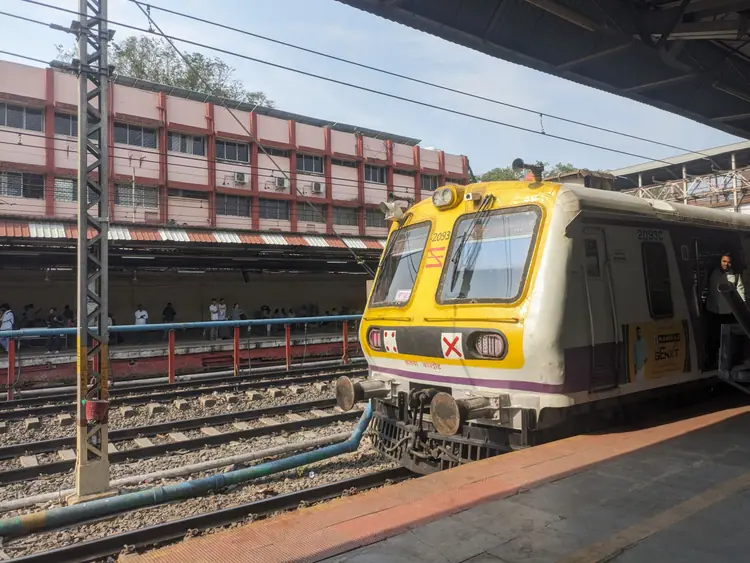
Kala Ghoda sits in the Fort district of south Mumbai, within walking distance of Churchgate on the Western line and CSMT on the Central and Harbour lines. Metro Line 3, the underground Aqua Line, runs through the Churchgate area, and new lines and stations keep opening, so check the current network before travelling. Black-and-yellow taxis and app cabs serve the island city; autorickshaws do not operate south of Bandra and Sion. February falls in the dry, pleasant season, with warm days and cooler evenings.
Expect crowds, especially at weekends and in the evenings. The festival is largely a walking event, so plan for a few kilometres on foot and a lot of standing. Venues sit close together, which makes it easy to change plans when a session is full. Timings, road closures, stage locations and ticketing change each year, so check the festival's official programme and the local press a day or two ahead, and remember that a museum's opening days are separate from the festival's.
- Reach the precinct by suburban train to CSMT or Churchgate, then walk or take a short cab ride.
- Wear light cotton in the daytime and carry a layer for cooler February evenings.
- Check each museum's weekly closing day before building a route around its opening hours.
- Keep the day flexible, since sessions fill up and stage timings shift.
Editorial review: 16 November 2026 · imptmumbai.in, written with AI assistance (see the editorial policy).