- District
- South Mumbai, west shore
- Airport
- 18.3 km from BOM
- Rail terminus
- Churchgate, Western line
- Known for
- Art Deco seafront
Character and history
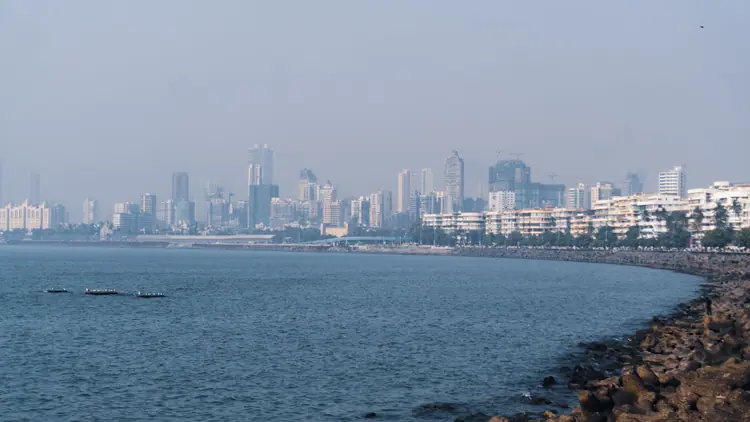
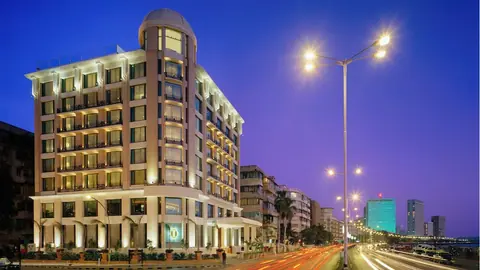
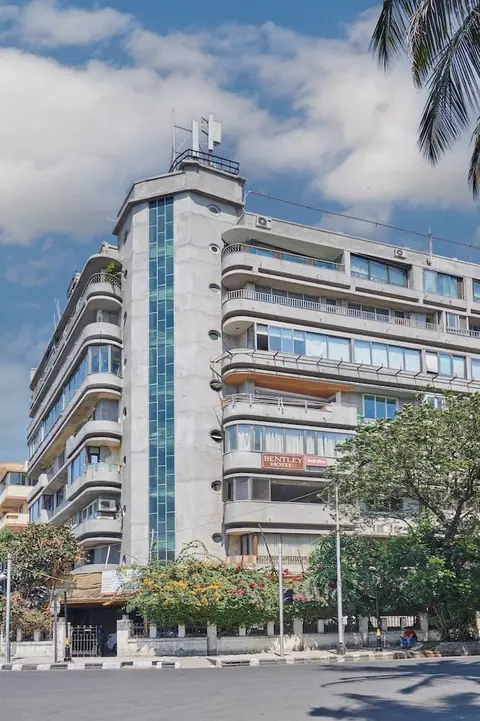
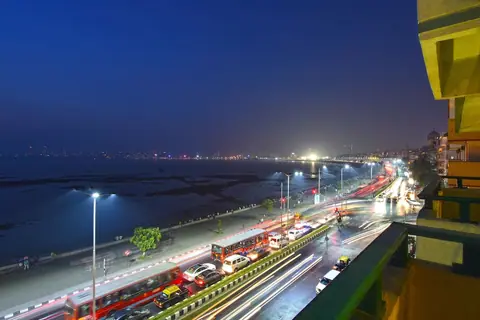
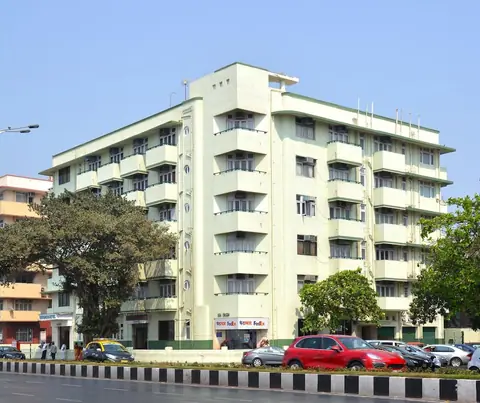
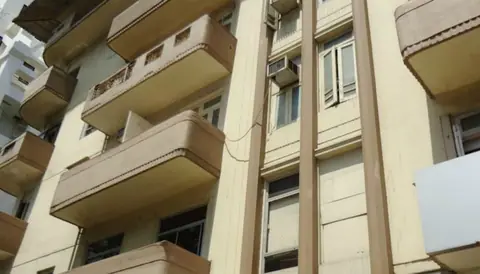
Marine Drive curves along the western shore of the island city on land reclaimed from the sea in the Backbay scheme of the 1920s and 1930s. Its sea wall, the sweep of the road and the street lights that follow the curve after dark gave it the nickname the Queen's Necklace. Behind the promenade, apartment blocks of the same decades stand in long Art Deco rows, their balconies, eyebrows and stepped roofs facing the water.
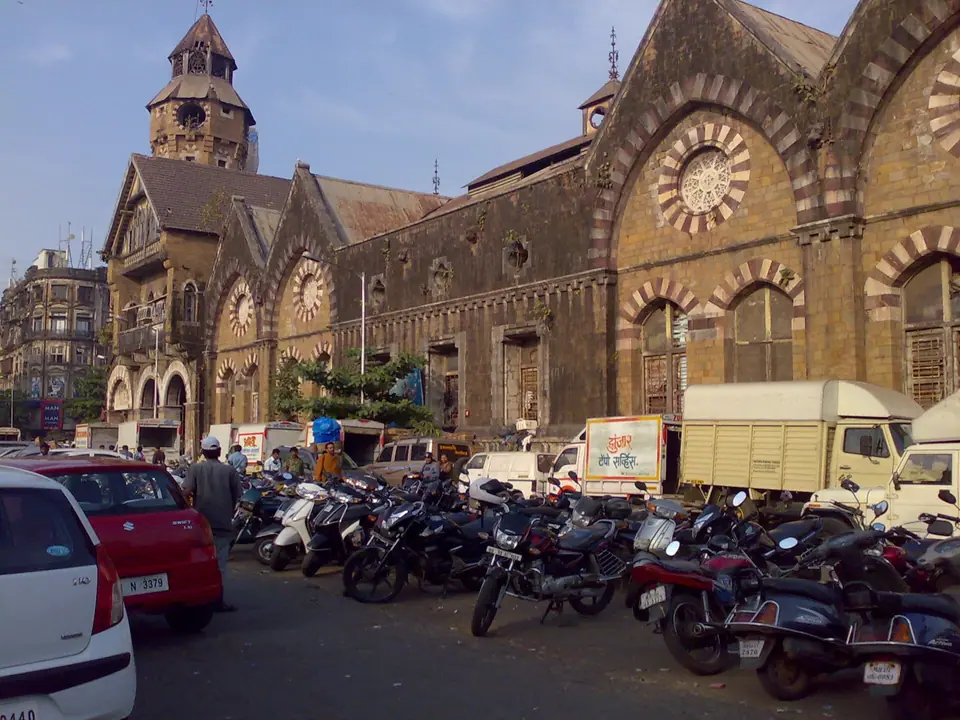
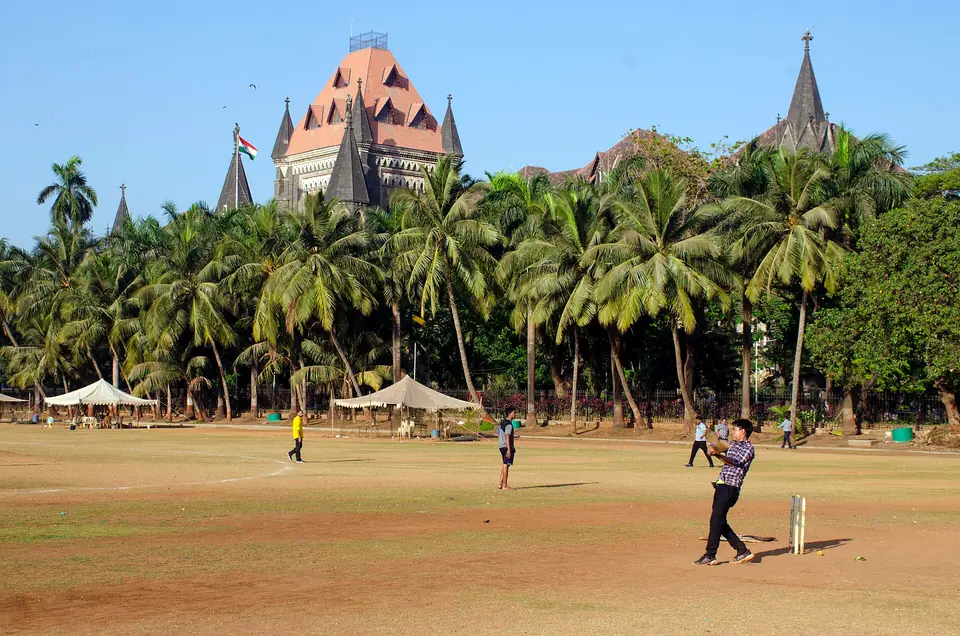
The Victorian Gothic and Art Deco Ensembles of Mumbai were inscribed by UNESCO in 2018, and this is where the two halves meet. Oval Maidan is the hinge: nineteenth-century buildings along its eastern side, twentieth-century blocks facing the sea. The Rajabai Clock Tower, designed by George Gilbert Scott and finished in 1878, rises behind the university. Churchgate station, the city end of the Western line, takes its name from a gate in the old fort wall that once stood nearby.
The neighbourhood is compact and mostly flat, and the sights sit within a short walk of one another. It is a place to look up as much as out to sea: the detail is in cornices, balconies and the lettering above shopfronts, not in any single museum door.
A first walk through it
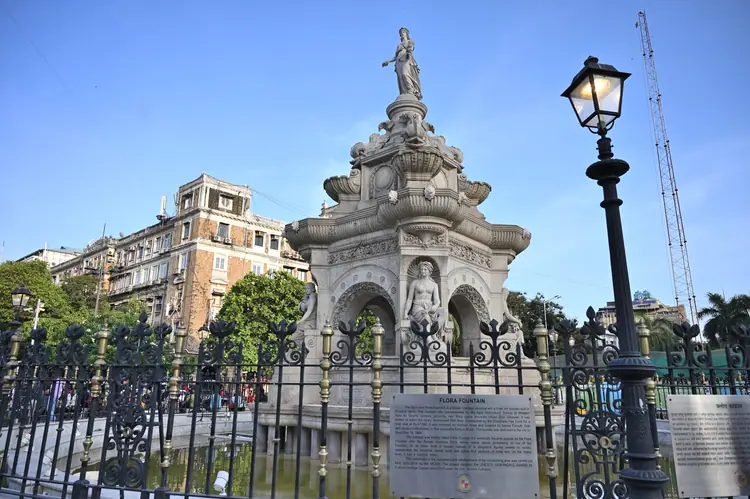
Begin at Churchgate station in the morning and cross to Oval Maidan, where cricket is played on the grass from early in the day. Walk the eastern edge for the High Court and the Rajabai Clock Tower, then turn south-east to Flora Fountain at Hutatma Chowk, the square that honours the Samyukta Maharashtra movement. Kala Ghoda and the Asiatic Society Town Hall are a short walk beyond, and the Keneseth Eliyahoo Synagogue sits close by.
Come back west to the sea in the late afternoon and turn north along Marine Drive. The promenade runs from Nariman Point past the Art Deco blocks and the sea wall to Girgaon Chowpatty, and the whole length rewards a slow walk, with stops on the benches. Sunset draws a crowd to the wall; after dark the street lights make the curve of the bay visible from one end to the other.
Sights, and travelling with children
The area holds a tight group of sights within walking distance of each other. The High Court, the university buildings and the Rajabai Clock Tower line the eastern side of Oval Maidan; the tower is not generally open inside, so check before planning a climb. The Asiatic Society Town Hall at Horniman Circle and the Keneseth Eliyahoo Synagogue at Kala Ghoda are close, and both keep limited visitor hours. Check opening days and any photography rules before setting out.
The promenade itself is the main thing to do here: walk it, sit on the wall, watch the gulls and the fishing boats, and look back at the city. The sea wall and the tetrapods take the force of the monsoon swell, and at high tide spray reaches the road, so keep children back from the edge. The Art Deco blocks behind the Drive are private buildings, seen from the street, and the detail is at first-floor level and above.
Children do well here because the promenade is flat and open, with a wide footpath set apart from the road, room to run and plenty of seating for the adults. Oval Maidan gives them grass and a chance to watch cricket up close. The sand at Girgaon Chowpatty at the north end is a draw, though the water is not safe for swimming. Snack carts, kulfi and cold drinks keep the walk going.
- Watch morning cricket on Oval Maidan from the railing, keeping clear of play and stray balls.
- Look up at the Art Deco blocks from the pavement; the curved balconies and lettering sit above the shopfronts.
- Check visitor hours for the High Court, the Town Hall and the synagogue before you set out.
- Walk to Girgaon Chowpatty at the north end for sand, snacks and a view back along the bay.
Eating on and off the promenade
Street food is the sound of this seafront. The carts and small counters near Girgaon Chowpatty turn out bhel puri, sev puri, pani puri, ragda pattice and pav bhaji through the evening, and vada pav is never far away. Kulfi and falooda cool the walk, and cutting chai, half a glass, is the standard order at any hour. Choose a cart with a queue and food that is being made in front of you.
Behind the promenade, the lanes towards Churchgate and Kala Ghoda hold Irani-style cafés for chai, bun maska and brun pav, Parsi kitchens serving dhansak, akuri, patra ni machhi and berry pulao, and Maharashtrian places with thalipeeth, sabudana khichdi and puran poli. Seafood is the other thread: bombil, surmai, pomfret, prawns and tisrya, cooked in Malvani, Koli and Konkan styles. Vegetarian food is easy to find, and East Indian cooking, with its bottle masala, fugias and sorpotel, belongs to the city's Catholic villages further north.
- Eat bhel puri and sev puri from the carts near the beach, standing up, as everyone does.
- Order cutting chai with bun maska in the older cafés behind the promenade.
- Look for Parsi dhansak and patra ni machhi on menus in the lanes towards Kala Ghoda.
- Try bombil, surmai or prawns in a Malvani or Koli seafood place.
- Finish with kulfi or falooda on the walk back along the sea.
Getting there and around
Chhatrapati Shivaji Maharaj International Airport is 18.3 km away, and a taxi or app cab from the terminals is the simplest way in with luggage. Navi Mumbai International Airport, 26.5 km across the harbour, is adding routes, so check which airport your flight uses. The Aqua Line metro links the airport area with the southern end of the city, and new lines and stations keep opening: check the current network before you travel.
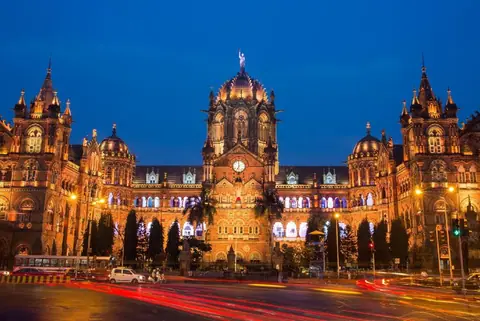
Churchgate is the city terminus of the Western line, which runs to Dadar, Bandra, Andheri and Borivali, so a local train is an option from the northern suburbs, though peak hours are very crowded. CSMT is 1.2 km away for the Central and Harbour lines. Within the area, walking covers almost everything; black-and-yellow taxis and app cabs serve the rest of South Mumbai. Autorickshaws do not operate in the island city south of Bandra and Sion.
Where to stay, and practical tips
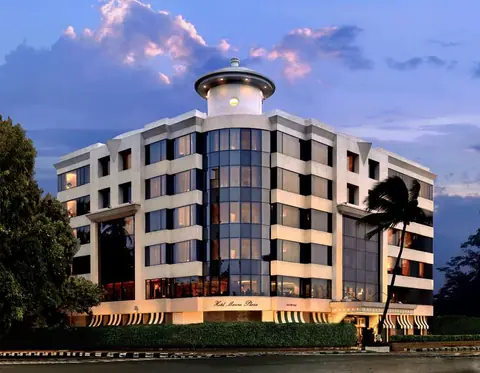
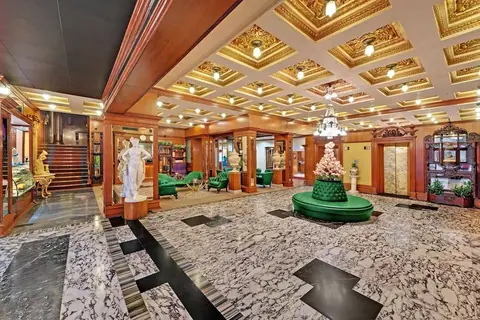
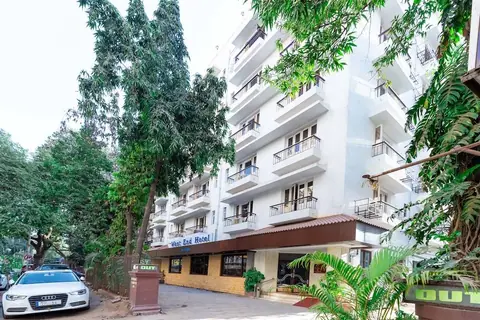
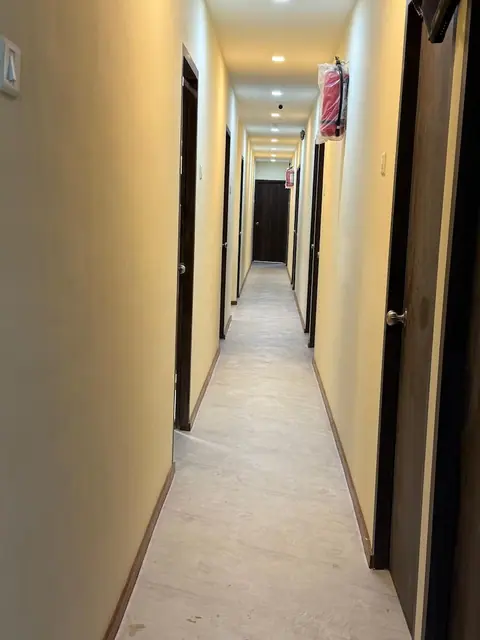
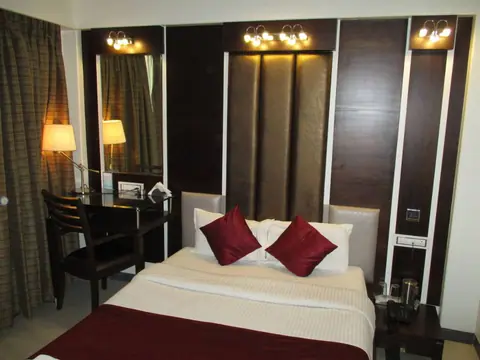
Stays in the area fall into three rough groups: sea-facing rooms in the older buildings along Marine Drive and Nariman Point, smaller places on the lanes between Churchgate station and the Oval Maidan, and guesthouse-style rooms near the station for shorter trips. Ask for a room facing the sea if the view matters, and one at the back if traffic noise does. Churchgate suits visitors who want to walk to the sights rather than travel to them.
The dry months from November to February are the most comfortable for walking, with warm days and cooler evenings. March to May is hot and humid, and the monsoon from early June brings spray over the sea wall and flooded roads; check the forecast and tide times before a promenade walk. Carry some cash, since phone payments are common but not universal, and dress modestly for temples and synagogues. The Kala Ghoda Arts Festival fills the streets each February; check the dates for the year you travel.
Editorial review: 16 November 2026 · imptmumbai.in, written with AI assistance (see the editorial policy).