- Renaming year
- Bombay became Mumbai in 1995
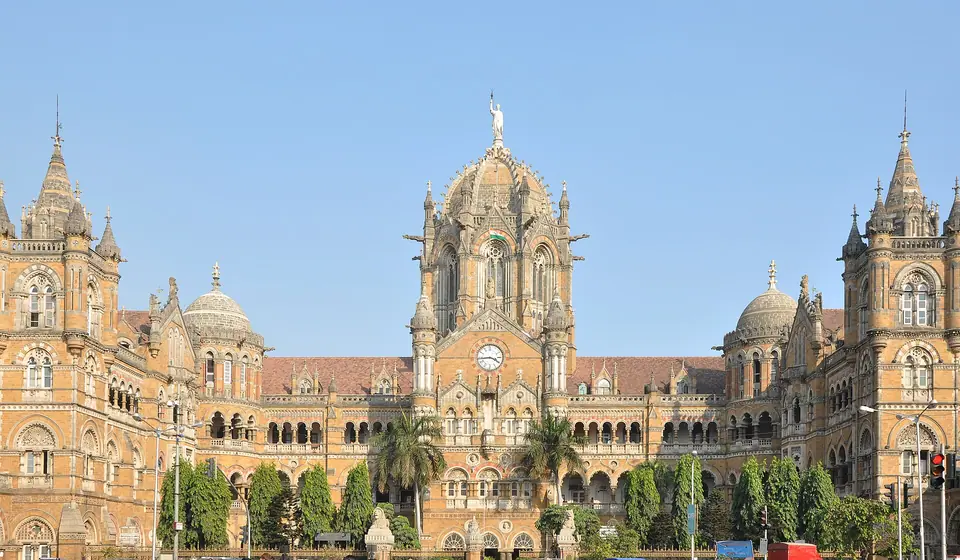
- Railway station
- Chhatrapati Shivaji Maharaj Terminus
- Older station name
- Victoria Terminus, still said as VT
- Area
- Fort and Kala Ghoda
Two names, one city
Mumbai and Bombay are the same city. The official name changed in 1995, and the older one stayed in daily use. You will hear both in a single conversation, often in a single sentence, and nobody treats it as an error. The same doubling runs through the map: a station that is CSMT on the ticket and VT in speech, a market that is Crawford on the sign and Phule Mandai in the record, a museum that renamed itself and kept its old name in the guidebooks.
Aamchi Mumbai, the affectionate Marathi phrase for the city, sits alongside both. Marathi is the official language of Maharashtra, and the renamings of the 1990s were part of a wider turn towards Marathi and regional names across the state. English, Hindi, Gujarati and Urdu remain widely spoken, so the newer names arrived in a city already comfortable with several versions of the same word. The result is not a dispute but a habit: a place can be named twice and still be understood once.
How the renaming happened
The change from Bombay to Mumbai was formalised in 1995. The new name draws on Mumbadevi, the goddess whose temple stands in Bhuleshwar, and on Marathi usage rather than the English rendering that had been used in administration and on maps. The decision covered the city itself, and the practice spread to stations, roads, institutions and museums in the years that followed. Visitors arriving with an older map will find that most of it still works, with a second name now attached to it.
The ground had been prepared long before. In the 1950s the Samyukta Maharashtra movement pressed for a Marathi-speaking state, and the square around Flora Fountain was renamed Hutatma Chowk to honour those killed in that agitation. Maharashtra was created in 1960, with Bombay as its capital. Seen that way, the change of 1995 was less a rupture than a further step in a long public argument about whose names the city carries on its buildings and its signs.
The station at the centre
Chhatrapati Shivaji Maharaj Terminus, at the head of the Central and Harbour suburban lines, with the long-distance platforms behind, is the clearest case. Designed by F. W. Stevens and built between 1878 and 1888, it was Victoria Terminus for most of its life and has been a UNESCO World Heritage Site since 2004. The stone carving, the arched front and the ground plan belong to the Victorian Gothic tradition, and the building is best seen from the road outside before you cross to the concourse.
The station carries Shivaji's full name today, and CSMT is the form printed on tickets, timetables and railway signage. Speech has been slower to follow. Ask for VT and you will be understood at once, by a taxi driver, a porter or a stranger at the entrance. Ask for CSMT and you will also be understood. The two names have settled into a division of labour: one for print, one for talk.
Names on the map
The pattern repeats across the island. Flora Fountain, erected in 1864, stands in the square now called Hutatma Chowk. Crawford Market, completed in 1869 with bas-reliefs by John Lockwood Kipling, is officially the Mahatma Jyotiba Phule Mandai. The Prince of Wales Museum, opened in 1922, is the Chhatrapati Shivaji Maharaj Vastu Sangrahalaya. In Byculla, Rani Baug and the Veermata Jijabai Bhosale Udyan are the same garden, holding the city's zoo, its botanical collection and its oldest museum, the Dr Bhau Daji Lad Museum.
Signage handles the doubling unevenly. Some boards show the newer name only, some carry both, and older plaques in stone often keep the name that was current when they were cut. Printed maps, phone maps and street signs may disagree with each other and with the person you ask. None of this causes trouble in practice: the older name is rarely wrong, and the newer one is rarely the only version in use among the people standing beside you.
- Flora Fountain, erected in 1864, stands in the square now called Hutatma Chowk.
- Crawford Market, completed in 1869, is officially the Mahatma Jyotiba Phule Mandai.
- The museum opened in 1922 as the Prince of Wales Museum and is now the Chhatrapati Shivaji Maharaj Vastu Sangrahalaya.
- Rani Baug in Byculla is also known as the Veermata Jijabai Bhosale Udyan.
How to ask the way
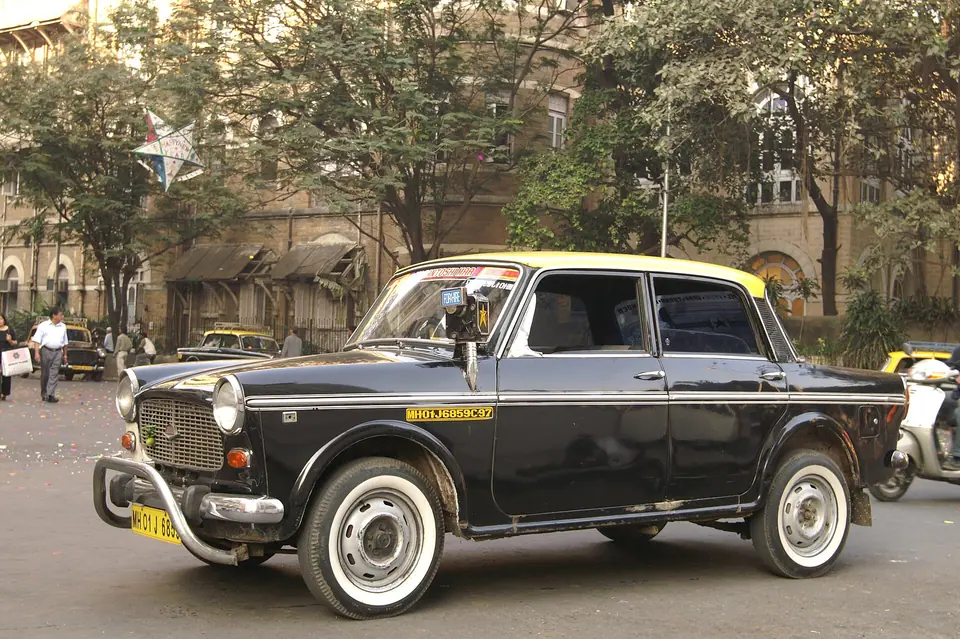
For a visitor the practical rule is simple: use whichever name you learned first, and add the other if a face looks blank. Directions in Mumbai are often given by landmark rather than by address, so a name that is recognised matters more than a name that is technically correct. For stations, say the current name and the old one together. For markets and museums, the older name often draws the faster response, because it is the one people grew up with.
Nobody will correct you. The renamings were official acts, not a test of loyalty, and residents move between the versions according to age, habit, language and the company they are in. A person who says Bombay in one sentence may say Mumbai in the next. The same ease applies to you. Saying VT in a city where the ticket reads CSMT marks you as a visitor, not as someone getting it wrong.
Reading names in Fort and Kala Ghoda
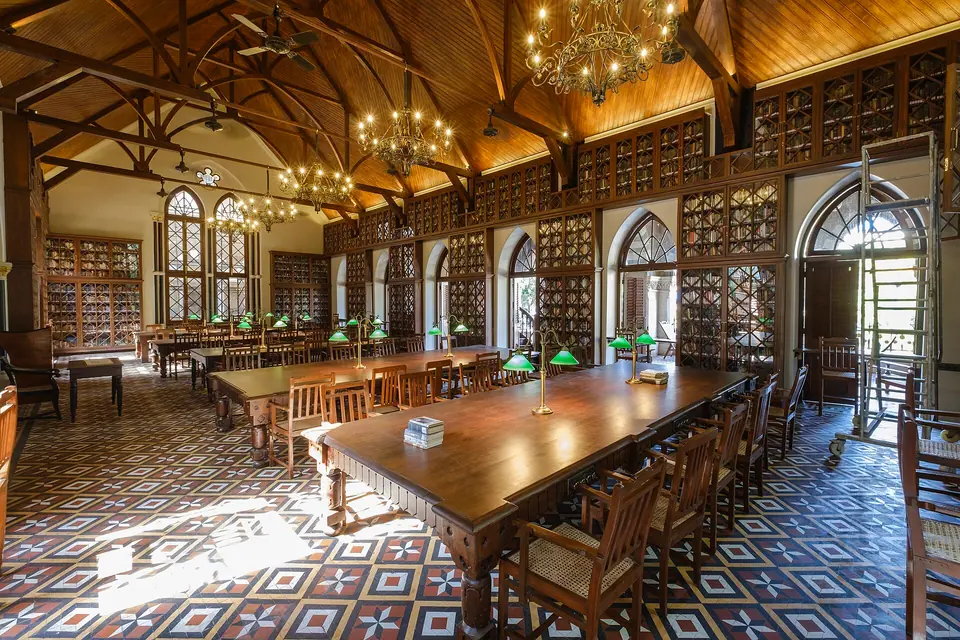
Fort and Kala Ghoda hold the densest run of these pairs, and a walk between them is the easiest place to watch renaming work on stone. The Asiatic Society Town Hall at Horniman Circle, completed in 1833, still carries its first name on the pediment. The Keneseth Eliyahoo Synagogue, built in 1884 by the Sassoon family, sits a lane away. The Rajabai Clock Tower, designed by George Gilbert Scott and finished in 1878, rises behind the university buildings.
Kala Ghoda means black horse, a name that now belongs to the precinct rather than to any single object within it. Look at the lettering on the buildings as much as at the street signs: the date, the donor and the original name are often cut into the stone above a door, while the newer name sits on a board at eye level. The Kala Ghoda Arts Festival, held each February since 1999, uses the older name without a second thought.
- The Asiatic Society Town Hall at Horniman Circle was completed in 1833.
- Keneseth Eliyahoo Synagogue in Kala Ghoda was built in 1884 by the Sassoon family.
- Jehangir Art Gallery opened in 1952, and the Kala Ghoda Arts Festival takes place each February.
- The Rajabai Clock Tower, designed by George Gilbert Scott, was completed in 1878 and stands about 85 m tall.
Editorial review: 16 November 2026 · imptmumbai.in, written with AI assistance (see the editorial policy).