- Livery
- Black body, yellow roof
- Classic model
- Padmini saloon
- Meter
- Flag-fall, distance, waiting time
- Rivals today
- Autos and app cabs
Why black and yellow
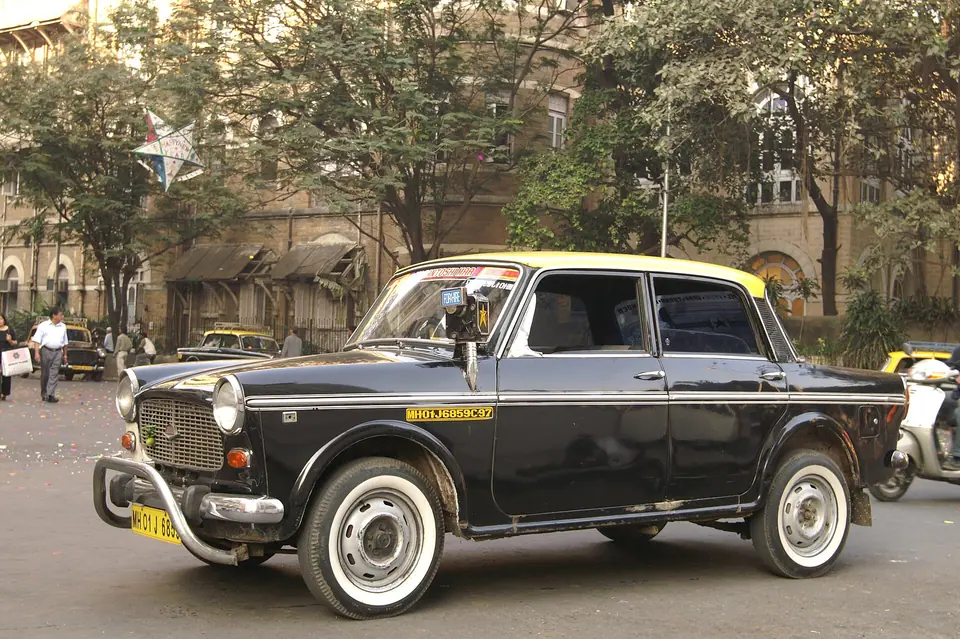
The black body and yellow roof are a piece of street design, not decoration. A yellow top is easy to pick out at a distance, in traffic, in rain and after dark; a black lower body does not show the grime of a coastal city. The scheme has been the rule for Mumbai's metered taxis for decades and it is enforced, so a car with those colours and a meter on the dashboard is a licensed taxi you can flag down. Other Indian cities run schemes of their own.
Colour also does quiet work as a wayfinding cue. In the Fort, and around Kala Ghoda, the black-and-yellow car is part of the streetscape: parked in a row beside the kerb near Churchgate, waiting outside the museum, slipping past Flora Fountain. Because the livery is regulated, you can read the street quickly. A yellow roof means hire; a plain car is private. For a visitor, that one distinction makes the first day in an unfamiliar city easier.
The Padmini years
For most of the second half of the twentieth century, one car carried Mumbai: the Padmini, a boxy saloon derived from the Fiat 1100 and built in India. It was small enough for narrow lanes, tall enough for a passenger to sit upright, and simple enough for a driver to keep running with basic tools. Generations of drivers knew its faults by heart. The same shape, in the same black and yellow, filled the roads for decades, and a body of city lore grew around it.
Inside, the Padmini was plain: vinyl seats, a thin dashboard, wind-down windows and a rear bench that took three without complaint. Drivers personalised them with seat covers, a small shrine on the dashboard and a cloth on the parcel shelf. The light body and simple mechanics meant the car could be repaired almost anywhere, which mattered in a city where a taxi has to earn every day. Few vehicles have been so closely tied to one place.
How the meter works
A Mumbai taxi is metered: the meter starts at a flag-fall charge when the trip begins and then adds by distance and by waiting time. The printed tariff card is the reference, and drivers are expected to carry one. Electronic meters are standard now, in place of the older mechanical units that were easy to dispute. Ask for the meter at the start of the trip. If it is not switched on, question the fare before you set off.
Short trips are where the meter makes most sense. From Churchgate to the Gateway of India, or from Kala Ghoda to Colaba Causeway, the distance is small and the fare follows the dial rather than a negotiation. For longer trips, or a wait while you visit a museum, agree the arrangement in advance. Fares change, so check the current rate with the driver or the state transport authority, and keep small notes and coins ready.
Waiting at a taxi stand
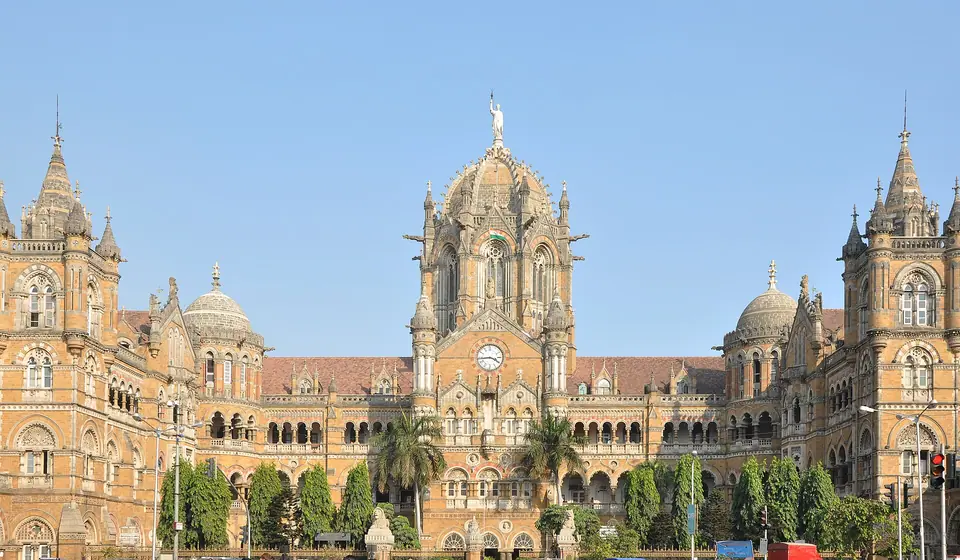
Taxis queue at stands across the city, and a stand is the reliable way to get one at a busy hour. In the Fort and Colaba the obvious ones sit near the stations and the big crossings: outside Chhatrapati Shivaji Maharaj Terminus, along the stretch by Churchgate, near the Gateway of India, and around Kala Ghoda and Flora Fountain. The queue moves in order, each driver takes the next fare, and refusals are rarer than on the street. Join the line and wait your turn.
Flagging one down in moving traffic works too, but there are conventions. Stand where a driver can pull in without blocking a lane, face the oncoming traffic and hold a hand out level. In the monsoon, a stand with a covered waiting area is worth the short walk. Late at night the stands near the stations are busier and safer than an isolated kerb. If a driver names a fare instead of using the meter, step back and wait for the next car.
- There are usually cars waiting outside the forecourt at Chhatrapati Shivaji Maharaj Terminus.
- The Churchgate stand is the easy choice for Colaba, Marine Drive and the Fort.
- Kala Ghoda and Flora Fountain have taxis through the day and into the evening.
- The Gateway of India stand fills quickly when the Elephanta ferries come back.
What replaced the Padmini
Padmini production ended and the fleet aged out. Newer small saloons and hatchbacks took its place, still painted black and yellow, still metered. Then came app cabs, booked from a phone with the fare shown before you set off, and hiring habits changed. The kaali-peeli did not vanish, but it stopped being the default. Today the cars are a mix of models and ages, kept to the same livery and the same meter, and there are fewer of them than there were.
The street hierarchy is worth knowing. In the island city, south of Bandra and Sion, autorickshaws do not run, so taxis and app cabs do the short-hop work. In the suburbs autorickshaws are everywhere and taxis are thinner on the ground. That is why a visitor staying in Colaba or the Fort sees a black-and-yellow car on every corner, while one staying in Andheri may see mostly three-wheelers. The taxi remains the simplest way to cross the island city with luggage.
- The black-and-yellow livery and a working meter still mark a licensed taxi.
- Air-conditioned taxis run as a separate category; ask before you get in.
- An app cab quotes the fare in advance, while a kaali-peeli follows the meter.
- Autorickshaws serve the suburbs; they do not run in the island city.
Riding one today
A ride is short and unceremonious. State the destination clearly, or show the address on a phone, and add the landmark as well as the street, because many roads change name along their length. Check that the meter is at the flag fall. Sit back: the rear bench is roomier than the exterior suggests. For a family with a suitcase, one taxi often does the work of two app bookings. Keep bags on your lap rather than the parcel shelf.
Some routes are worth taking by taxi for the view alone: the sweep along Marine Drive at dusk, the climb to Malabar Hill, the run past the Gateway of India and the docks at Colaba. Drivers know the shortcuts that avoid the worst of the evening traffic. Pay at the end, by the meter, rounding up a little after a long wait in a jam. Carry some cash even if you usually pay by phone, since not every car takes a card.
Editorial review: 16 November 2026 · imptmumbai.in, written with AI assistance (see the editorial policy).