- Festival
- Ganesh Chaturthi, August or September
- Signature sweet
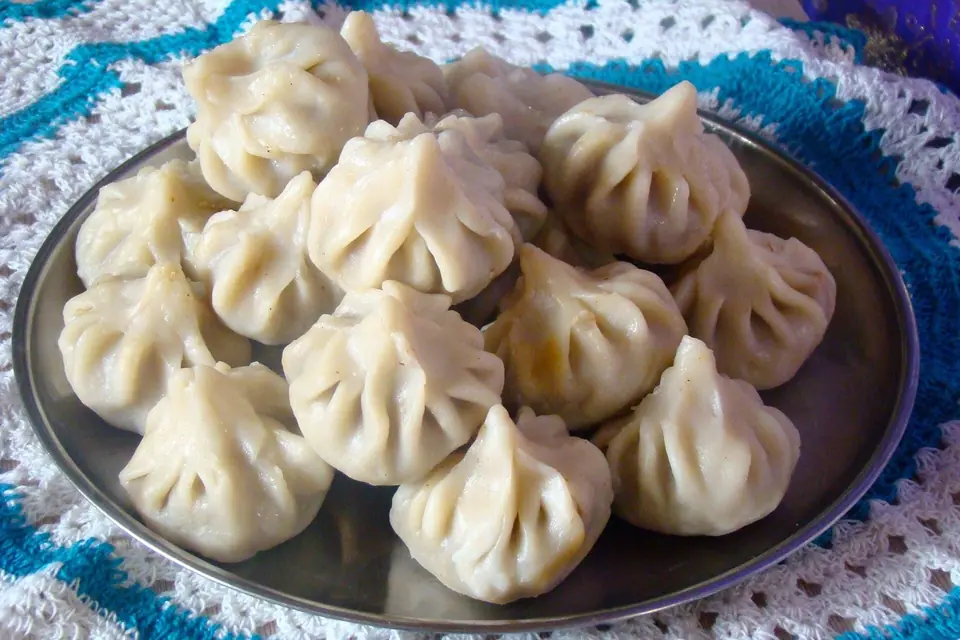
- Ukadiche modak, steamed rice-flour dumpling
- Filling
- Fresh coconut and jaggery
- Where to look
- Dadar, Mahim, Girgaon
What ukadiche modak is
Ukadiche modak is a steamed dumpling: a thin wrapper of rice flour, a filling of fresh coconut cooked with jaggery, and a shape that asks for patience. The name refers to the steaming. The cook presses a little dough into a cup, pleats the rim into ridges, spoons in the filling and closes the top into a point. Many households offer twenty-one modaks to Ganapati, though the count follows family tradition rather than a fixed rule.
The sweet belongs to a family. Talniche modak are fried instead of steamed, with a firmer shell, and they keep for longer. Some kitchens add cardamom, nutmeg or saffron to the coconut; others add chopped dry fruit and use less jaggery. Coastal households may cook the filling down further, so that it stays dense and dark. The steamed version is the one most closely tied to the ten days of Ganeshotsav, and the one most often made at home.
How a modak is made
The dough is the part that decides the result. Rice flour is mixed with hot water and a pinch of salt, then kneaded while it is still warm and kept covered so that it does not dry out. A dough that is too stiff will crack at the pleats; one that is too soft will slump in the steamer. The filling is cooked first: grated fresh coconut and jaggery stirred over heat until the mixture thickens, then left to cool.
Shaping takes practice. A small ball of dough is flattened in the palm or pressed into a mould, and the rim is pinched into pleats with the thumb and forefinger. The filling goes in, the pleats gather, and the top twists into a peak. The modaks then sit on a greased plate or a piece of banana leaf inside a steamer, and they are done when the wrapper turns glossy and pulls away cleanly.
- Rice flour, mixed with hot water and a pinch of salt.
- Fresh grated coconut, cooked with jaggery until the mixture holds together.
- Cardamom, nutmeg or saffron, added to the filling in some homes.
- A steamer, and a greased plate or banana leaf to rest the modaks on.
The other sweets of the season
Modak is the sweet most attached to Ganeshotsav, but it is not the only one on the table. Besan ladoo, karanji and sheera appear as naivedya in many homes, and shrikhand with puri turns up at festival lunches. Puran poli, the sweet flatbread of chana dal and jaggery, belongs to the Maharashtrian kitchen through the year and is often made for guests. Mithai counters also lean heavily on coconut and jaggery for the ten days.
At the sweet counters of Dadar and Mahim the ten days bring out variations: modak with dry fruit, modak coloured with saffron or cocoa, and fried karanji dusted with sugar. Purists will tell you the steamed coconut version is the only one that counts, which is part of the pleasure. Karanji is the practical choice for a journey, since a fried pastry survives a train ride better than a steamed dumpling.
- Karanji, a fried crescent pastry with a coconut and jaggery filling.
- Besan ladoo, made from gram flour, ghee and sugar.
- Sheera, a soft semolina sweet often served warm as prasad.
- Shrikhand, strained curd sweetened and flavoured with saffron or mango.
Where to look in Dadar and Mahim
Dadar is a good place to start because the neighbourhood cooks at home and shops at the same few markets. The lanes around Dadar station carry flower and vegetable sellers, and the market streets fill with coconuts, jaggery and rice flour in the days before the festival. Mahim has a quieter version of the same trade around its station and bazaar. Home cooks who take orders for modak and karanji fill up early.
Timing matters. A morning walk through the market lanes shows you the raw ingredients; the finished sweets appear later in the day. Many families still make modak themselves and give them to neighbours rather than selling them, so an invitation into a home is worth accepting. Community halls and housing societies in both neighbourhoods organise modak-making sessions in the week before Ganesh Chaturthi, and residents are usually happy to explain the pleating.
Ten days of modak and pandals
In Dadar, the sarvajanik pandals around Shivaji Park draw long queues through the ten days, and the streets nearby turn into a fair of food stalls, flowers and small toys. Mahim keeps a more local scale, with pandals at street corners and decorations put up by neighbourhood committees. Wherever you stop, modak is likely to be on the prasad plate, along with a handful of other sweets.
Visarjan, the immersion, closes the festival. Processions move toward the shore with drumming and dancing, and the roads are managed by the traffic police; the sea at Girgaon Chowpatty, Juhu and other beaches takes the offerings. Crowds are heavy and the trains busier than usual. Keep to the sides of the road, keep hold of children, and expect to walk the last stretch rather than ride.
Modak after the ten days
The festival ends but the sweet does not disappear. Many households make modak on Sankashti Chaturthi, the monthly observance for Ganapati, and on other days set aside for the deity. Temples that keep Ganapati as their main shrine may offer modak as prasad through the year. In the Konkan and along coastal Maharashtra, the same rice-flour and coconut idea turns up in other shapes and other names, with the same logic of a hot filling inside a plain wrapper.
What to look for when you buy: a wrapper that is thin and translucent rather than thick and chalky, a filling that tastes of coconut first and sugar second, and a fresh smell. Steamed modak are eaten the same day in most homes, because the coconut sours quickly in Mumbai's humidity; the fried versions keep for a few days. Buy in the morning where you can, and eat before the day gets hot.
Editorial review: 16 November 2026 · imptmumbai.in, written with AI assistance (see the editorial policy).