- Community
- East Indian Catholics of Mumbai
- Made
- Once a year, stored in bottles
- Core spices
- Dried red chillies, coriander, cumin, cloves
- Classic dishes
- Sorpotel, fugias and vindaloo
What bottle masala is
Bottle masala is the signature spice blend of Mumbai's East Indian community, the Catholic families who farmed, fished and kept orchards in the city's northern villages long before the suburbs reached them. It is a coarse, dark powder of dry-roasted spices, ground at home and stored in glass bottles, which is where the name comes from. Every household keeps its own proportions, so the blend on one Bandra table is never quite the one next door.
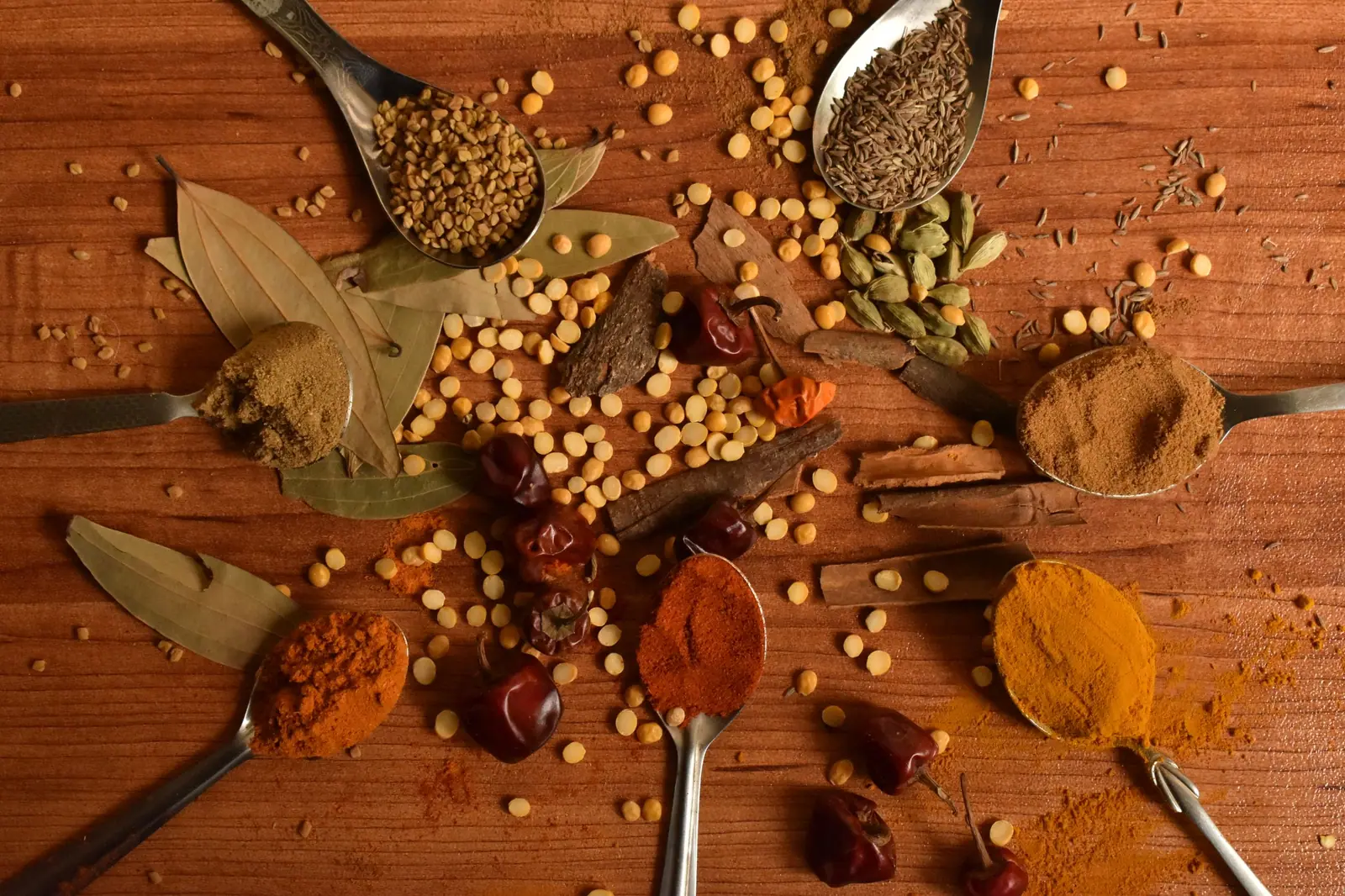
The mix leans on dried red chillies for heat and colour, with coriander, cumin, peppercorns, cinnamon, cloves and cardamom behind them. Some kitchens add turmeric, some a little fenugreek, and a few stop at chillies and coriander. Toasting and grinding are done in the hot, dry weeks before the monsoon, when the spices dry quickly and the powder keeps through the damp months. The smell of roasting chillies is the signal that the season has begun.
Made once a year
Bottle masala is traditionally made once a year, in the heat of April and May, and the work stretches over a day or two. Chillies are spread on mats in the sun, then roasted in wide iron pans over a low flame and stirred constantly so they darken without burning. The smell carries down the lane, and neighbours know exactly what is happening in the kitchen. Children are often given the job of watching the pan.
Cooled spices are ground at home or taken to a mill, and the powder is filled into bottles and sealed. A family may make enough to last twelve months, and jars are passed to married daughters, aunts and friends who have moved away from the village. Because it is made in quantity and left to settle, the blend softens in the first weeks and deepens over the year. Nothing is wasted, down to the last spoonful scraped from the grinding stone.
- Dried red chillies make up the bulk of the blend and most of its heat.
- Coriander seeds are toasted until they smell nutty and warm.
- Cumin, peppercorns and cloves add depth and a little bite.
- Cinnamon and cardamom go in sparingly in most family recipes.
- Turmeric goes in for colour in some kitchens and is left out in others.
Cooking with bottle masala
In an East Indian kitchen the blend is a base, not a finishing spice. A spoonful goes into hot oil with onions at the start of a meat curry; it is rubbed onto pork before a slow cook; it is stirred into prawn and fish dishes with coconut milk and kokum. Because the chillies are already roasted, the powder catches quickly, so the flame is kept low and the pan is watched.
The heat it gives is rounded and slow rather than sharp, and the smell in the kitchen is earthy rather than fiery. Bottle masala also moves into everyday cooking: a pinch in an egg curry, a little over fried fish, a spoonful in a potato bhaji when the vegetables need depth. Cooks add salt separately, because the blend is made without it, and they taste as they go.
The feast dishes
The blend comes into its own at Christmas and at weddings, when East Indian families cook the dishes that define the community's table. Sorpotel, a dark, vinegar-rich pork dish, is the one people ask for, and it is better after a day or two in the pot. Fugias, small fried breads that puff up like balloons, are served alongside. Vindaloo, a sharp vinegar curry, and coconut-heavy fish curries fill out the rest of the meal.
Christmas is the big season in Bandra's East Indian villages, when families cook for days and the table stays open for visitors. The Bandra Fair, held in the week after 8 September for the feast of the Nativity of Mary, is the other marker in the year. Dates move with the calendar, so check before you go. At both, the smell of frying fugias is part of the street.
- Sorpotel is pork cooked slowly in vinegar and bottle masala, and it is better after a day.
- Fugias are small fried breads, lightly sweet, puffed hot and eaten with the curry.
- Vindaloo uses the blend in a sharp vinegar curry that suits pork and beef.
- Prawn or fish curry with coconut milk is mopped up with rice at the same table.
East Indian Bandra
The East Indians are among Mumbai's oldest Catholic communities, with villages across the north of the city and a long presence in Bandra. Ranwar, Chimbai, Pali and the lanes off Chapel Road still hold low houses with verandas, crosses at the corners and small chapels. Mount Mary Basilica, whose present church dates from 1904, stands on the hill above them, and the Bandra Fort at Land's End looks back over the shore.
These are living neighbourhoods rather than exhibits. People are at home, dogs sit at the gates and the lanes are narrow. Walk quietly, ask before photographing a house or a person, and do not treat a doorstep as a viewpoint. Sunday morning Mass at the basilica is a good time to be in the area, and the walk back down through the villages is short and shaded.
Buying and storing bottle masala
Bottle masala is not a supermarket staple in the way garam masala is. It is usually made at home and given away, and small jars turn up at parish events, school fairs and church festivals in Bandra and the northern villages. If a jar is offered, accept it; if you want to buy one, ask at a parish office or at a fair rather than hunting the shelves of a grocery shop.
Stored in a sealed glass bottle away from light and steam, the blend keeps for many months, and many cooks say it improves in the first weeks. Keep the bottle dry, use a dry spoon, and add the powder early in cooking so the spices have time to open. If it has lost its smell, it has lost most of its point, and a fresh jar will taste quite different.
Editorial review: 16 November 2026 · imptmumbai.in, written with AI assistance (see the editorial policy).