- First inhabitants
- Koli fishing communities
- Dock at Colaba
- Sassoon Dock, built 1875
- Sea festival
- Narali Purnima, in August
- Monsoon closure
- Roughly June to late September
Who the Kolis are
The Kolis are the fishing communities who lived on the seven islands before the land was joined, drained or built over. Marathi is their language and the tide is their calendar. Long before the docks, the mills and the reclamation, Koli settlements sat on the island's western and eastern shores, close to the water, the fish and the routes the boats took each morning. The community also gives the city its name: the goddess Mumbadevi, from whom Mumbai is traditionally derived, is honoured at a temple in Bhuleshwar.
Fishing here follows the monsoon. The south-west rains close the sea for weeks, boats stay ashore for repairs, and the season reopens with a festival. Koli households are spread across the city, in Colaba, Cuffe Parade, Worli, Mahim, Bandra, Khar Danda, Versova, Madh, Marve and Gorai, so a walk along almost any shore brings you to a koliwada, the quarter where the families live and the boats are kept. Some of those lanes are centuries old and still hold families fishing the same water.
Colaba's fishing quarter
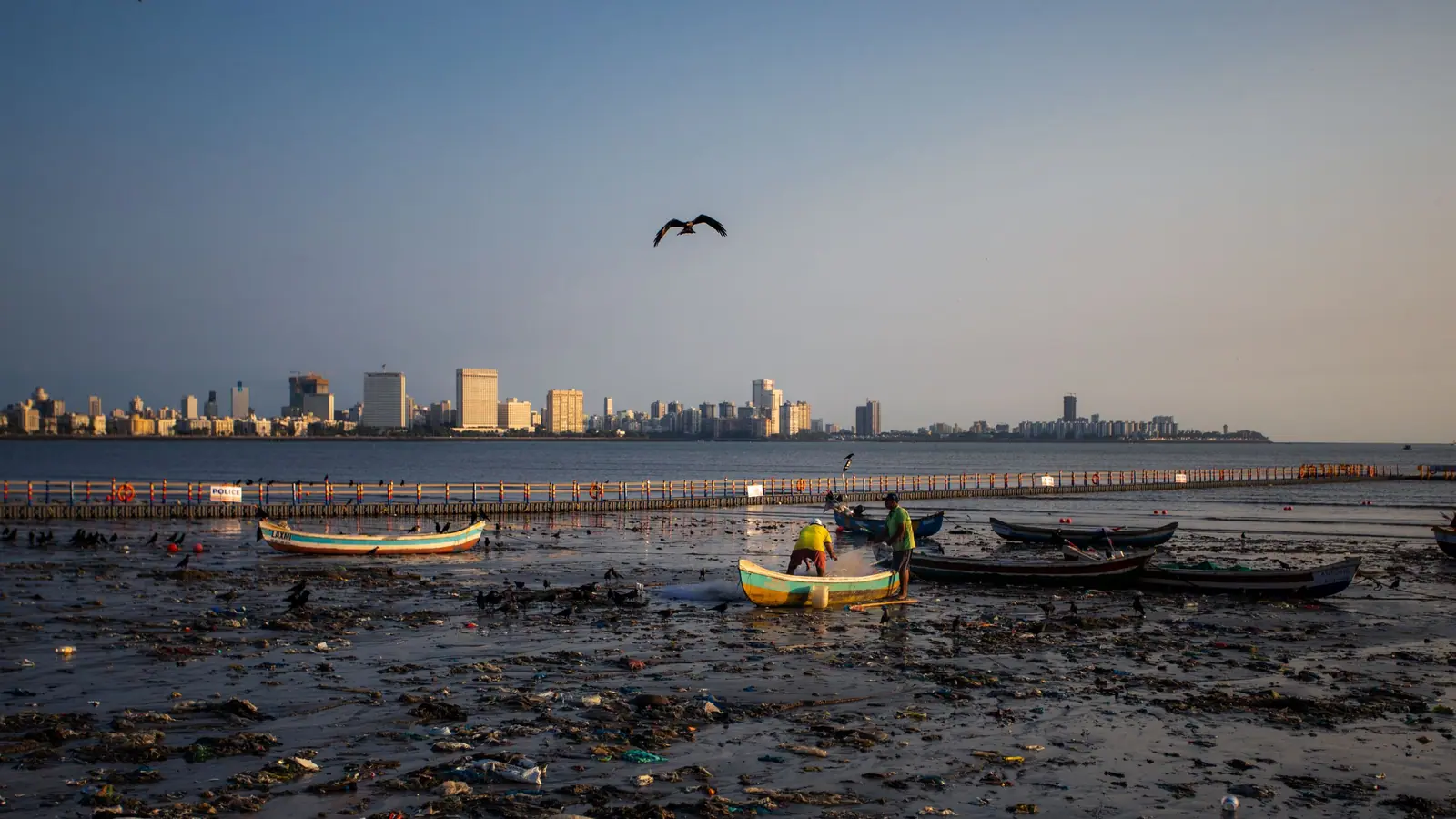
At the southern tip of Colaba, the fishing quarter sits beside Sassoon Dock, built in 1875 by the Sassoon family and still one of the busiest landing points in the city. Boats come in before first light and the catch is sorted, weighed and sold in the cold hours of the morning. Photography is sometimes restricted around the dock and the auction, so ask before raising a camera. Weekday mornings are calmer than weekends.
The lanes behind the dock, and the older koliwada at Cuffe Parade, hold drying racks, nets, ice stores, repair yards and small shrines to the sea goddess, and the work runs through the morning. Koli women have long run the fish trade, buying at the dock and selling on in markets across the city. Walk quietly, keep to the edges of working areas, and expect to be asked what you are doing there. A polite answer helps.
- Boats unload at first light, when the dock is at its most active.
- Nets are mended by hand along the landward side of the koliwada.
- Fish is laid out to dry on racks in the older lanes.
- Small shrines to the sea goddess are garlanded before a boat goes out.
- Ice stores and repair yards stand where hulls are patched between trips.
Narali Purnima on the shore
Narali Purnima falls in August, on the full moon of the Marathi month of Shravan, and marks the reopening of the fishing season after the monsoon. Koli families offer coconuts to the sea, decorate their boats and gather on the shore. The coconut, the naral, gives the day its name. Boats are repainted for the occasion, and the first trip of the season is treated as an event in itself. The date moves with the lunar calendar each year.
Narali Purnima is the best known Koli occasion, but it is not the only one. Ganesh Chaturthi brings the community, like the rest of the city, to the water for the immersions at Girgaon Chowpatty and Juhu, and Koli households keep their own shrines to the sea goddess, offered flowers and a coconut before a boat leaves harbour. If you are on a beach during visarjan, expect crowds, drums and closed roads.
A Koli kitchen
Koli cooking begins with what comes off the boat. Bombil, the Bombay duck, is fried in a light coating; surmai, pomfret and prawns go into a coconut gravy or onto the fire; tisrya, the clams sold in small heaps, are cooked in a thick masala. Koli households use a dark, dry masala of their own, ground in quantity and stored for the year, and the sourness of kokum appears often. Rice and chapatis do the rest.
Fish is bought fresh and cooked the same day, and the drying racks along the shore turn a surplus into stock for the monsoon weeks when the boats stay in. Seafood is served in homes and at shore-side stalls, usually simply: fried fish, a thin curry, rice. The cooking of the community turns up in ordinary meals rather than in grand kitchens, and lunchtime around a koliwada is the time to look for it.
- Bombil, the Bombay duck, is fried in a light coating and eaten hot.
- Surmai and pomfret go onto the fire or into a coconut gravy.
- Tisrya, the clams sold in small heaps, are cooked in a thick masala.
- Kokum sol kadhi, a sour pink drink, cools a hot meal.
Worli, Bandra and the north
Worli Koliwada sits at the base of the Worli headland, below the road that carries traffic onto the Bandra-Worli Sea Link, and it is far older than either the link or the mill land behind it. Fishing families still keep boats in the sheltered water, and the lanes hold shrines, drying racks and small workshops. The settlement rewards a slow walk, though it is a working neighbourhood rather than a sight.
Bandra's koliwada lies near Land's End, below Bandra Fort, a Portuguese watchtower built in 1640 that looks over the rocks. The lane to Mount Mary Basilica, whose present church dates from 1904, is close by, and the Bandra Fair fills the hill in the week after 8 September. Versova, Khar Danda, Madh, Marve and Gorai hold further Koli settlements, several of them reached by creek roads.
Visiting with care
A koliwada is a residential quarter, not an attraction with gates. Ask before photographing people, boats or the auction, keep out of the way of winches, ice vans and loaded heads, and stay clear of nets laid out to dry. Early morning is when the work happens and when a visitor is most in the way. Weekday visits are calmer, and a walk with a local guide explains far more than an unaccompanied wander.
Colaba and Cuffe Parade are within walking distance of the Fort and the Gateway of India, so the southern fishing quarter fits easily into a morning. Worli and Bandra are further north, reached by the suburban railway or by road. The monsoon, from about June to late September, closes the sea and quiets the shore, so check before you go if the boats are the reason for the trip.
Editorial review: 16 November 2026 · imptmumbai.in, written with AI assistance (see the editorial policy).