- Completed
- 1924
- Foundation stone
- 1913
- Location
- Apollo Bunder, Colaba
- Ferries from here
- Elephanta Island
The arch and its history
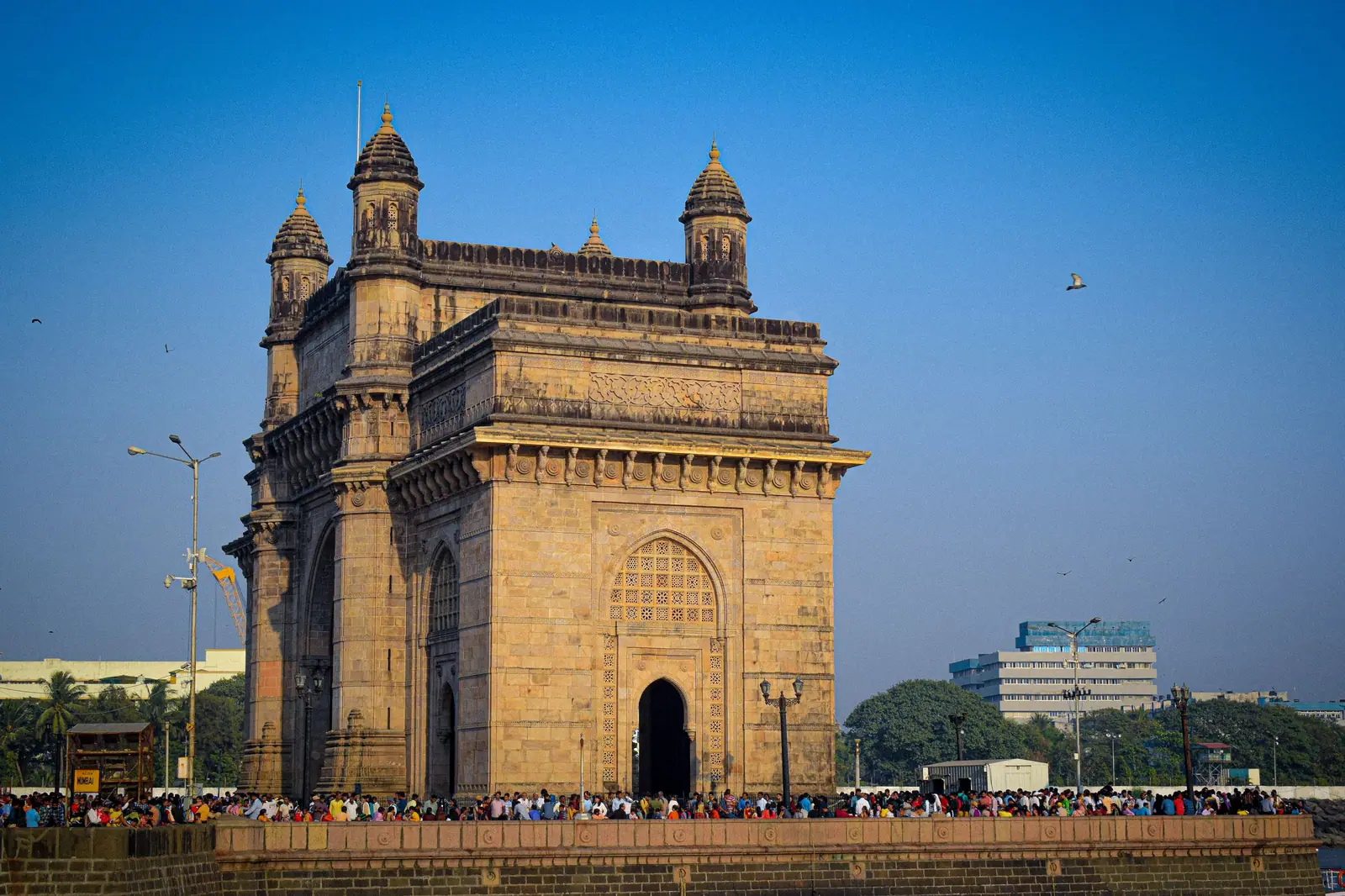
The Gateway of India is a basalt arch on Apollo Bunder, at the southern tip of Colaba, built to mark the landing of King George V and Queen Mary on their visit to India in 1911. The foundation stone was laid in 1913 and the structure was completed in 1924. It was designed as a ceremonial gateway for arrivals by sea, at a time when most visitors to Bombay came ashore by boat rather than by air, and it still reads as a threshold between the harbour and the city.
The arch stands on the harbour front where the city's passenger traffic once began, and its scale reflects that role. In 1948 the last British troops to leave India marched through it, a moment that reversed the meaning of the monument. Today it is a public square, open to all, and one of the most photographed structures in the city. The stonework is often described as Indo-Saracenic, mixing Gujarati and Islamic detail with a plain, heavy outline.
What to see at the Gateway
Most visitors come for the arch itself: a wide opening in grey basalt, topped by a central dome and small turrets, framing the harbour. Look at how the stone takes the light in the late afternoon, when the square is at its busiest. On either side are low halls and steps down to the water, where small boats wait. The paved square in front is broad enough to absorb a crowd and open enough that the arch stays visible from a distance.
The statues of Chhatrapati Shivaji Maharaj and Swami Vivekananda stand on the same front, and the road behind the arch leads towards the Colaba Causeway. Out at sea you can watch harbour traffic and the ferries heading for Elephanta. The stone buildings behind the arch form the backdrop of most photographs, so walk back a little for the full frame. Bag checks at the entrances are routine, so allow a few minutes.
- Step back across the square to see the dome and turrets in one frame.
- Walk down to the water's edge early, when the boatmen are still arranging crossings.
- Find the statues of Chhatrapati Shivaji Maharaj and Swami Vivekananda along the front.
- Turn around at sunset for the view back over the city's domes and rooftops.
Getting to Apollo Bunder
The Gateway sits at the far southern end of the island city, about 1.1 km from Fort and Kala Ghoda and roughly 2 km from the centre. Churchgate, on the Western line, is the nearest station, and the walk from there passes through Colaba's streets and the Causeway. From CSMT on the Central line, take a taxi or an app cab. Autorickshaws do not operate this far south, so expect black-and-yellow taxis instead.
From the airport at Santacruz and Sahar the straight-line distance is about 19.9 km, but the drive through city traffic takes much longer than that suggests. Metro Line 3, the underground Aqua Line, runs through this part of the city with stations serving the Fort and Churchgate area; new lines and stations keep opening, so check the current network. Ferries for Elephanta leave from the steps beside the arch, a crossing of about an hour each way.
When to go and how long
The dry season, roughly November to February, is the most comfortable time: warm days, cooler evenings and clear light on the water. March to May is hot and humid, and the south-west monsoon from about June to late September brings spray, high tides and grey skies, with dates that vary each year. October stays hot and sticky after the rains. Early morning is the calmest hour, before the tour groups and vendors settle in.
Allow an hour for the arch, the square and the statues, and more if you plan to eat in Colaba or walk the Causeway. Add half a day for the ferry to Elephanta, which is closed on Mondays (check before you go). Weekday evenings and Sunday afternoons are the busiest, when families arrive in numbers. Festival days and public holidays bring heavy crowds and slow traffic, so plan around them if you can.
Nearby in Colaba and Fort
The Gateway is the southern anchor of a walkable stretch of the old city. The Colaba Causeway runs north from here, a street of stalls and shops that leads into Colaba's lanes. Sassoon Dock, built in 1875, is where the Koli fishing boats land their catch at dawn; photography there may be restricted, so check locally. The Afghan Church, begun in 1847 and consecrated in 1858, sits inland among the quiet streets.
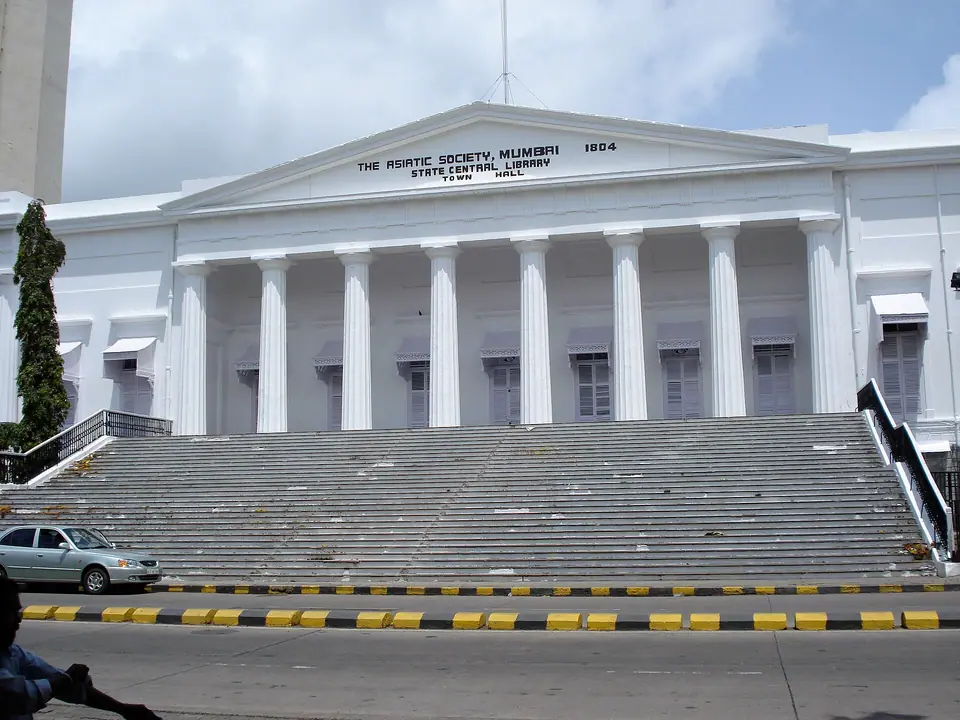
North again is Fort and Kala Ghoda, about 1.1 km away, where the museums and galleries cluster with the Victorian Gothic and Art Deco buildings of the UNESCO listing. The Chhatrapati Shivaji Maharaj Vastu Sangrahalaya, the Jehangir Art Gallery and the Asiatic Society Town Hall are within a short walk of one another. Marine Drive and its curve of sea-facing buildings lie to the west, an easy taxi ride from the arch.
- Colaba Causeway for stalls, books, clothes and street food.
- Sassoon Dock at dawn, when the fishing boats come in.
- Afghan Church, consecrated in 1858, in the lanes behind Colaba.
- Kala Ghoda's museums and galleries, about 1.1 km north.
- The Elephanta ferry, boarding from the steps beside the arch.
Practical tips and where to stay
Dress for heat and humidity: light cotton, comfortable shoes for stone paving and a hat. The square is exposed, with little shade at midday. Keep bags zipped in the crowds around the arch and ignore offers of unsolicited guided tours. Photography is straightforward outdoors, but ask before photographing people, particularly vendors and boatmen. Large tripods and professional setups may attract attention from security, so check on the day.
Colaba itself is the obvious base for a short visit, with guesthouses and small heritage stays within walking distance of the arch, the Causeway and the waterfront. Fort and Kala Ghoda suit anyone who wants museums, restaurants and CSMT close by. Churchgate and Marine Drive are quieter in the evenings and good for sea air. Bandra, further north, is more relaxed and convenient for the airport side of the city.
Editorial review: 16 November 2026 · imptmumbai.in, written with AI assistance (see the editorial policy).