- Area
- Girgaon and Grant Road
- Nearest station
- Grant Road, Western line
- Order
- Two or three small plates
- Spice
- Ask for less chutney
Reading the board
A chaat stall is a small counter with a few steel bowls, a stack of plates and one person assembling each order in front of you. Nothing is cooked to order: the puris are fried in batches through the day, the chutneys are made in the morning, and the plates are built as you watch. You point at what you want, the vendor mixes it, and you eat it standing with a paper napkin. Plates are snack-sized, so most people order two or three different things rather than one large portion.
The board above the counter uses a short vocabulary. Puri means the small round fried disc; sev is the fine gram flour noodles scattered on top; ragda is a warm pea curry; chutney covers the green chilli, sweet tamarind and garlic sauces. Sukha means dry, with less chutney, and teekha means hot. Ask for the chutneys on the side if you want to control the heat, and keep a bottle of water with you rather than relying on the stall.
Bhel puri, puffed rice
Bhel puri is puffed rice tossed with chopped onion, tomato, coriander, green chilli, a handful of sev and two chutneys, one sweet and one sharp. The vendor mixes it in a steel bowl with a spoon, working fast so the rice stays crisp, then tips it onto a plate. It is light, sour, sweet and hot at once, and it makes the gentlest introduction to the board for anyone unsure about spice.
Order sukha bhel if you want the dry version, with the chutneys added sparingly, and plain bhel puri if you want it wetter and more sour. Some stalls add boiled potato or chickpeas; others keep it to rice and sev. Eat it quickly, because puffed rice softens within minutes. A spoon works, but a piece of puri used as a scoop is the usual way in Mumbai and keeps the plate tidier.
Sev puri, pani puri, dahi puri
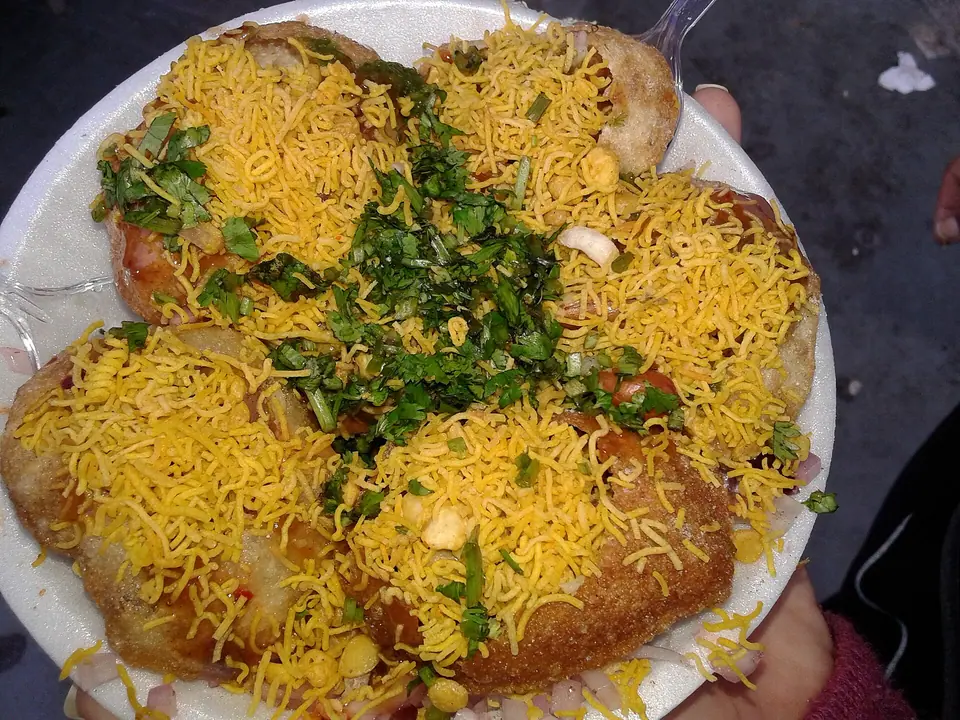
Sev puri is the flattest thing on the board: six small puris laid out, each topped with mashed potato, onion, coriander and chutney, then buried under sev. There is no hollow to fill, so it is eaten in one bite and the puri stays crisp until the last second. It is a drier, tidier plate than bhel puri and a good order for anyone eating while walking.
Pani puri is the opposite: hollow puris cracked open, filled with potato and chickpea, then dipped in spiced water and eaten whole, one at a time. The water is usually sharp with mint and tamarind. Dahi puri takes the same puris and covers them with whisked yogurt, chutneys and sev, which makes it cool, creamy and the least spicy plate on the list. Ask for the pani mild on a first plate, since the water can be hotter than it looks.
- Sev puri: flat puris loaded with potato, chutney and a thick layer of sev.
- Pani puri: hollow puris filled with potato and dipped in spiced water.
- Dahi puri: puris with yogurt, tamarind chutney and sev, cool and mild.
- Ragda puri: puris with warm pea curry ladled over, the most filling of the four.
Ragda, the pea curry
Ragda is dried white peas, soaked overnight and simmered until soft, with turmeric, ginger and a little chilli. It is a thin, mild curry, more savoury than hot, and it is the only warm element on most chaat boards. Stalls keep it in a wide pan over a low flame and ladle it out with a small bowl. On its own it is plain; with chutney, onion and sev it becomes the base of the plate.
Ragda pattice puts two shallow-fried potato patties on a plate, covers them with ragda, then adds onion, coriander, sweet chutney, garlic chutney and sev. The patties are soft inside and crisp at the edge, and the curry soaks in within a minute. It is heavier than bhel or sev puri and works as a small meal rather than a snack, especially in the evening or on a cool day.
Ragda puri is the smaller version: the same curry spooned over puris, without the patties. Order it if you want the taste of ragda without a full plate of potato. Both plates are eaten with a spoon, with raw onion on the side to cut through the sweet chutney. Ask for less chutney if you want to taste the peas, which are mild, earthy and slightly sweet on their own.
Beyond chaat on the board
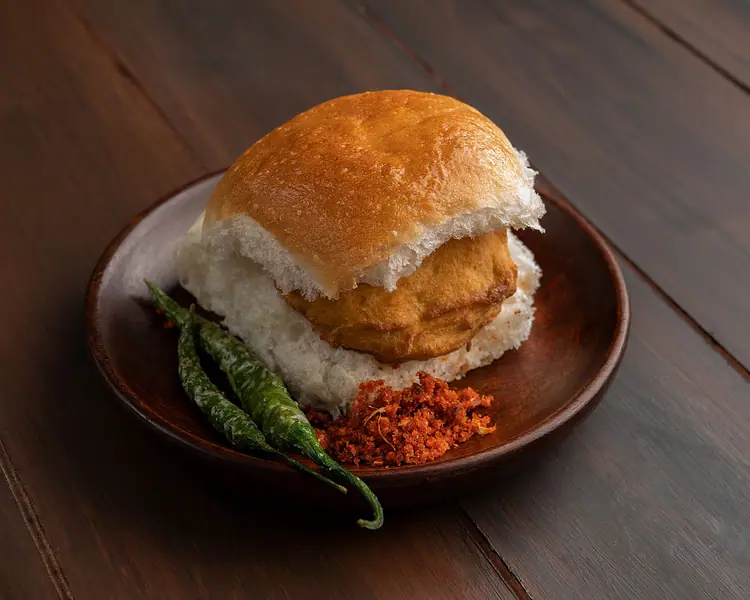
Most chaat stalls sell more than chaat, and the board is worth reading to the bottom. Vada pav, a fried potato dumpling in a soft bun with chutney, is often made at the same counter. So is the Bombay sandwich, layered with potato, cucumber, tomato and green chutney, and dabeli, a sweet and savoury bun filling from Kutch. These are heavier than the puri dishes and often eaten later in the day.
Misal pav and pav bhaji belong to the same world of Mumbai snack food but need a table and a few minutes. Misal is a sprouted bean curry, hot and sour, served with bread to mop it up; pav bhaji is mashed vegetables cooked on a griddle with butter and spice. Kulfi and falooda close the meal at many stalls. Almost everything on a chaat board in this part of the city is vegetarian.
- Vada pav: a fried potato dumpling in a bun with green and sweet chutney.
- Misal pav: a hot sprouted bean curry eaten with soft bread.
- Dabeli: a sweet, savoury bun filling with potato, chutney and sev.
- Bombay sandwich: white bread layered with potato, cucumber, tomato and chutney.
- Kulfi: dense frozen milk, often served on a stick, to finish.
Eating in Girgaon and Grant Road
Girgaon runs from Charni Road station down to Girgaon Chowpatty, taking in Khotachiwadi, the lanes around Bhuleshwar and the old Marathi neighbourhoods behind the beach. Chaat here is everyday food: stalls near the station, carts along the shore and small counters in the bazaars. Grant Road, one stop north on the Western line, is busier and more mixed, with snack counters in the lanes off the main road and around the market streets.
Evenings are the best time, when the stalls light up and the beach fills with families. Walk from Charni Road towards the Chowpatty and eat as you go, then sit on the sand with a kulfi. During Ganesh Chaturthi the same beach hosts immersions and the crowds are enormous; check the dates each year before planning an evening there.
Editorial review: 16 November 2026 · imptmumbai.in, written with AI assistance (see the editorial policy).