- Industry base
- Goregaon and Andheri
- Film City
- Dadasaheb Phalke Chitranagari, Goregaon
- Access
- Organised tours only
- Screen languages
- Hindi, Marathi and English
How the Hindi film trade works
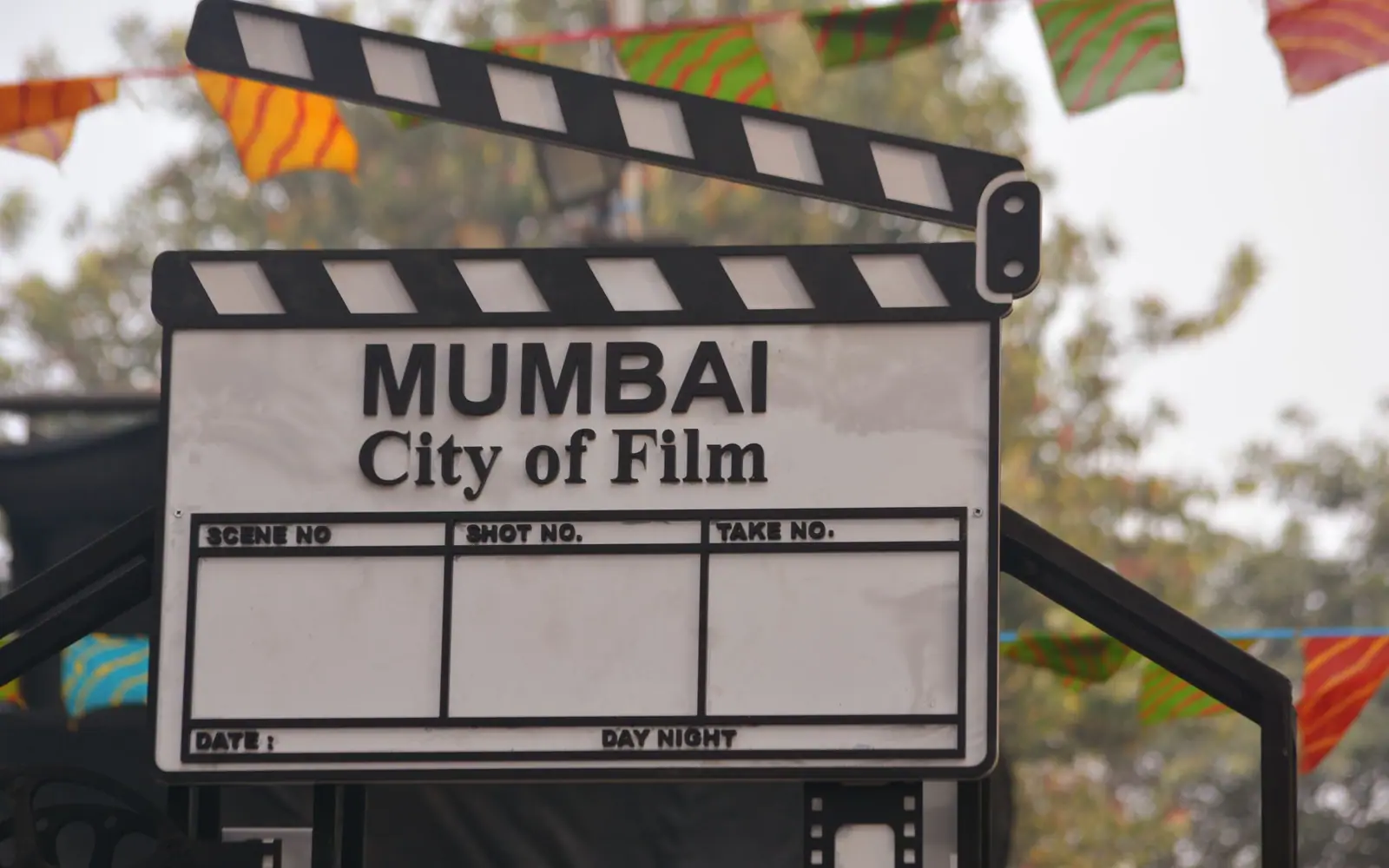
Bollywood is the shorthand for the Hindi-language film industry, which has its base in Mumbai although its cast and crews come from across India. The work is spread out: studio floors in Andheri and Goregaon, dubbing and recording rooms, edit suites, rehearsal halls, and the streets and buildings used as locations. A film passes through writing, financing, shooting and post-production, and each stage has its own specialists. Most of this happens quietly, in ordinary buildings, with no sign on the door.
Visitors sometimes expect a single address where Bollywood can be seen. There is no such place. The industry is a trade rather than an attraction, and its daily work is closed to the public. What you can do is join an organised studio tour, watch a film in a city cinema, and keep an eye out for crews shooting on the street. Each gives a different view of the same trade, and none of them is staged for visitors.
Film City at Goregaon
Dadasaheb Phalke Chitranagari, known to everyone as Film City, is the large studio complex at Goregaon, named after the man who made India's first feature film. Within its boundaries are shooting floors, open-air locations and standing sets, laid out over a big site at the northern edge of the city. It is a working production centre, not a public garden. Access is through organised tours run by outside operators, and what is open on the day depends on what is shooting (check before you go).
A tour usually means a drive through the grounds, a stop at outdoor sets, and an explanation of how a production is put together. Sets are built, dressed and taken down, so what you see may be a palace front, a village street or a half-finished interior. Floors with a shoot in progress stay closed, and photography is often restricted. Ask the guide what is permitted before you raise a camera, and accept that a closed door is part of the visit.
- Tours must be arranged in advance; the gates do not admit walk-in visitors.
- Expect walking, as the grounds are large and the space between sets is wide.
- Sets change with each production, so a return visit shows something different.
- Ask before photographing; the rules vary with the production at work.
Watching a film in the city
Cinema-going is part of ordinary city life rather than a special outing. A big Hindi release opens on many screens at once, and the first weekend is busy, so seats are best booked ahead, either online or at the counter. Single-screen halls and multiplexes sit side by side, and the audience is vocal: whistles for an entry, comments across the aisles. Marathi, English and other language films share the same cinemas, often on shorter runs.
Inside, seats are numbered and an interval breaks the film roughly halfway, when the snack counters fill. Trailers come first, and advertising before them. Hindi films in Indian cinemas often play without subtitles, so if Hindi is not your language, look for a show marked as subtitled, or choose an English-language film. Check the certificate and the language version when booking; some releases open in more than one.
Shoots on the street
Crews shoot all over the city. The old buildings of Fort, the sweep of Marine Drive, the Bandra seafront, the lanes of Colaba and the mill districts of the central city all appear regularly. Many locations need permits, and a street can be closed for a few hours while lights, cables and vans are set up. You may turn a corner and find a scene in progress, with a crowd watching quietly from behind a line.
Keep out of the frame and behind any taped line. Do not walk between the camera and the actors, and do not photograph artists or crew without asking; a request to move is normal and not personal. If a scene is being shot, wait a few minutes rather than pushing through. Children should stay close in the crowd. When the crew packs up, the street returns to normal within minutes.
What stays off limits
Most of the film world is closed. Private studios, working floors, dubbing rooms and edit suites admit people by invitation or through an organised tour, and security at the gates turns away everyone else. The homes of actors and directors, in Juhu, Bandra and Andheri, are private residences; they are not sights, and anyone offering a look inside is not offering anything real. Temples, markets and streets used as locations can also close a section during a shoot.
Treat a live set as a workplace. Street shoots are sometimes visible from a distance, and nobody minds a visitor watching quietly. Photographs of people at work should be taken only with their agreement, and pictures of children never without a parent's consent. If a production assistant asks you to move, the answer is yes, and it is worth moving promptly rather than arguing the point.
- Working floors, edit suites and dubbing rooms, unless you are on an organised tour.
- Private homes of actors and directors, in Juhu, Bandra, Andheri and elsewhere.
- Any live set without a word from the crew, however open the location looks.
- Access to a location during a shoot, which can be closed by permit at short notice.
Crafts behind the camera
Film-making in the city goes back to the silent era, and the industry's crafts have stayed local. Cameras and lights are hired from workshops in Andheri, costumes are stitched nearby, sets are built by carpenters who work only on films, and dancers rehearse in halls that double as studios. These trades are not open to visitors, but you can notice them in the streets: painted backdrops stacked outside a workshop, a van of lighting equipment, a crowd of extras waiting at a bus stop.
One easy way to see the city through its films is to watch a Mumbai-set Hindi film before arriving and then walk the same roads. The Fort heritage mile, the Marine Drive promenade and the Bandra seafront appear again and again, and the Victorian Gothic and Art Deco buildings around the Oval Maidan form a UNESCO World Heritage Site. Watching a film at home, then standing in front of the building in it, is the closest most visitors get to the trade.
For families, the simplest film-related outing is a cinema trip plus a walk past a well-known location. A tour of Film City suits older children who can manage a long walk and plenty of standing. Neither takes a full day, and both fit around the city's other sights.
Editorial review: 16 November 2026 · imptmumbai.in, written with AI assistance (see the editorial policy).