- Category
- Protected forest and nature park
- Nearest areas
- Borivali and Kandivali, 1.5 km
- From the centre
- 32.3 km straight-line
- From the airport
- 14.7 km from BOM
What the park is
Sanjay Gandhi National Park is a protected forest of about 100 sq km inside the northern limits of Mumbai, entered from Borivali East. The boundary between forest and suburb is abrupt: streets and buildings on one side, wooded hills on the other. Two lakes, Tulsi and Vihar, lie inside the park and form part of the city's water supply. It is one of the largest protected green spaces in the Mumbai region, and it is managed as forest rather than as a city garden.
The hills are basalt, the rock that gives this coast its flat-topped ridges, and the Kanheri caves were cut into one of these hillsides between roughly the 1st century BCE and the 10th century CE. Those caves are the park's oldest built heritage and the reason many visitors come. Around them the forest does what forests do at the edge of a city: it holds birds, reptiles and small mammals close to the suburbs, and it keeps the northern skyline wooded.
What to see
The Kanheri caves are a group of rock-cut Buddhist caves on a hillside inside the park: prayer halls with carved pillars, plain cells where monks lived, and cisterns cut to catch the rain. Some carvings and inscriptions survive on the walls. The path up is by steps, and the climb is steady rather than difficult; allow time for it in the heat. Check current access at the gate, since parts of the cave complex can be closed.
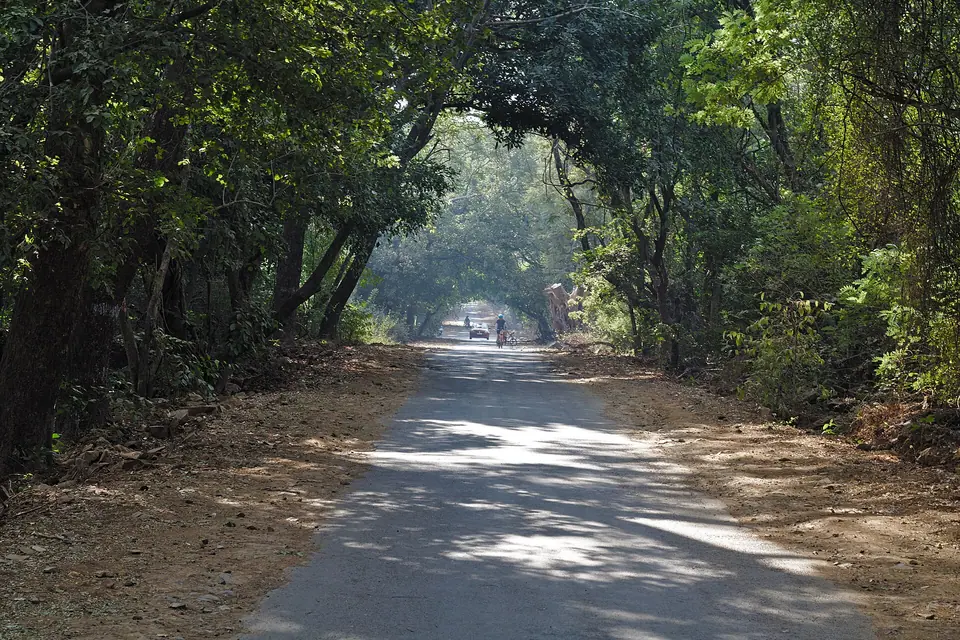
The lakes are the other reason to walk in. Tulsi lake sits deep in the forest and Vihar lake lies further north; both are water supply lakes, and the ground around them is not open to visitors in the way the main trails are. Ask at the gate which paths are open that day. The road through the park is also a good place to watch birds, especially early in the morning.
- The Kanheri caves, with carved halls, monks' cells and rainwater cisterns cut into the hillside.
- Tulsi lake, seen from the main road through the forest rather than from its shore.
- Walking trails through dry deciduous forest, good for birds and butterflies after the rains.
- The wooded ridge and the northern skyline, clearest on a cool morning in the dry season.
How to get there
The simplest route is the Western line of the suburban railway to Borivali, from Churchgate via Marine Lines, Mumbai Central, Dadar, Bandra and Andheri. Borivali station is the interchange for the park, and autorickshaws and cabs cover the last stretch to the gate. Autorickshaws run freely in this part of the city, unlike the island city south of Bandra and Sion, where black-and-yellow taxis and app cabs do the work.
By road, the park is 32.3 km straight-line from the centre of Mumbai and 14.7 km from Chhatrapati Shivaji Maharaj International Airport, though the drive takes much longer in peak hours. Metro Line 7 serves the western suburbs, and new lines and stations keep opening, so check the current network before you plan. App cabs are easy to book for the return trip, but the gate area is busy in the evening.
When to go and how long
The dry season from November to February is the easiest time: warm days, cooler evenings and firm paths. March to May is hot and very humid, so start early and carry more water than you think you need. The south-west monsoon arrives around early to mid June and lasts to about late September; the forest turns green, the trails turn slippery, and some routes close. Dates vary each year, so check before you go.
Allow at least half a day for the caves and the ride through the park, and a full day if you want a trail as well. Mornings are better for birds, for heat and for crowds. Opening hours change with the season and with the light, so confirm timings with the park office before setting out. Weekends and school holidays are the busiest, and the cave path can feel slow when a group arrives.
Nearby sights
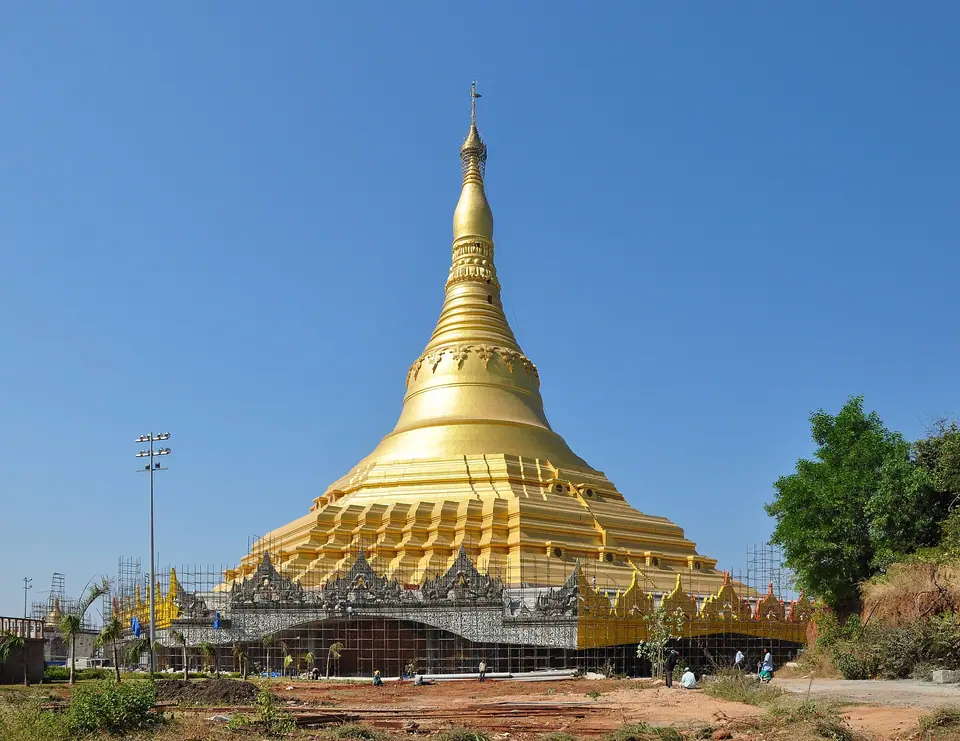
The park sits in the northern suburbs, and the coast nearby is worth half a day of its own. Gorai and Manori beaches lie west of Borivali, reached by road around the creek or by ferry across it from Borivali West. The Global Vipassana Pagoda at Gorai is a large meditation hall under a dome, free to visit, with hours that change; check before you go.
Further north, Aksa and Madh beaches sit beyond Malad and are a short drive from the park gate. In Goregaon, Dadasaheb Phalke Chitranagari, the large film studio complex known as Film City, can be seen only on organised tours, so check access in advance. Birdwatchers may also consider the Thane Creek Flamingo Sanctuary, declared in 2015, where flamingos are seen roughly from November to May; it lies across the harbour rather than next door.
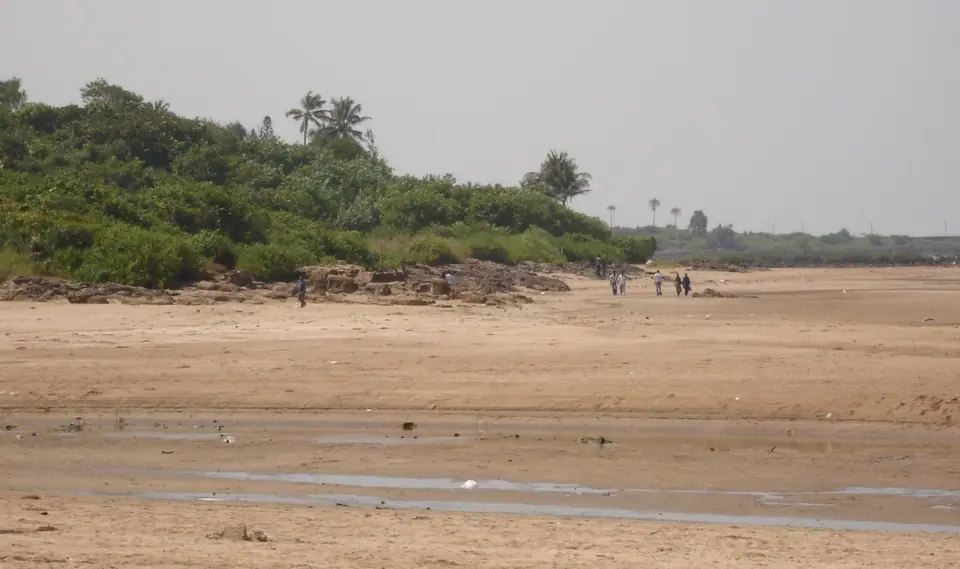
- Gorai and Manori beaches, reached by road or by ferry across the creek from Borivali West.
- The Global Vipassana Pagoda at Gorai, a domed meditation hall, free to visit; check hours.
- Aksa and Madh beaches beyond Malad, a short drive north of the park.
- Dadasaheb Phalke Chitranagari in Goregaon, seen on organised tours only; check access first.
Practical tips
Wear light cotton, comfortable shoes and a hat; the cave path is stone and steps, and the open stretches are hot by mid-morning. Mosquito repellent matters in and after the monsoon. Photography is generally allowed on the trails and at the caves, but rules can change at short notice and some spots may be restricted, so follow what the forest staff tell you. Keep voices low and take litter out with you.
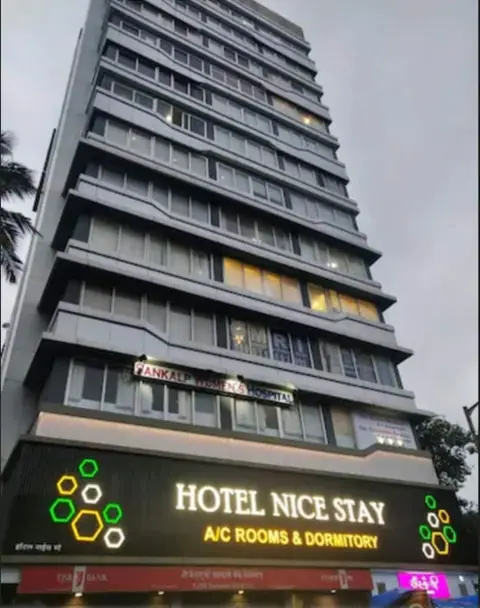
For places to stay, Borivali and Kandivali have the widest choice within a short ride of the gate, which suits an early start. Malad is a little further but still convenient, and Andheri East, around the airport, works if the park is one stop on a longer trip. Staying in the island city, around Colaba, Fort or Marine Drive, means longer journeys here but easier sightseeing. Book ahead in the dry season.
Editorial review: 16 November 2026 · imptmumbai.in, written with AI assistance (see the editorial policy).