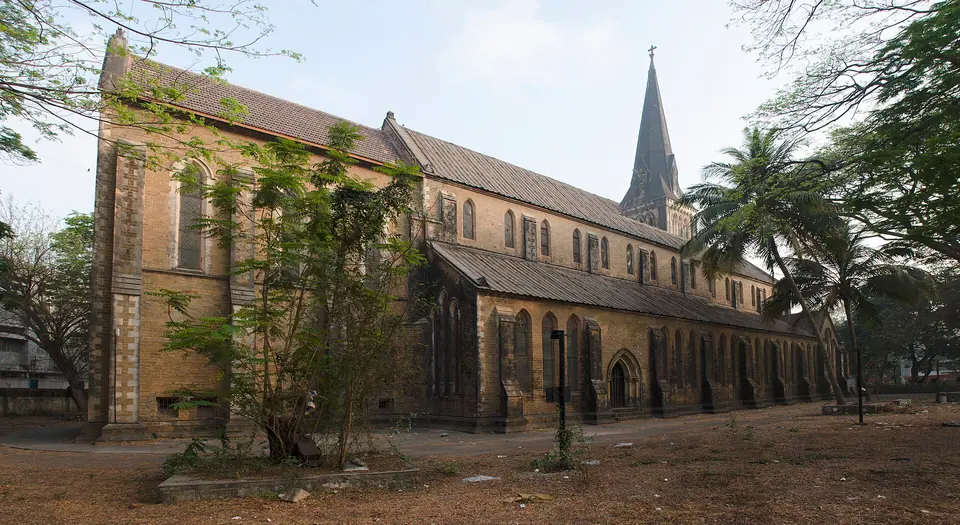
- Commemorates
- First Anglo-Afghan War
- Consecrated
- 1858
- Building begun
- 1847
- Location
- Colaba, south Mumbai
A church of remembrance
The church of St John the Evangelist stands in Colaba at the southern end of the island city, and most people know it as Afghan Church. Building began in 1847 and the church was consecrated in 1858. It was raised to remember the soldiers who died in the First Anglo-Afghan War, a campaign fought in the late 1830s and early 1840s on the other side of the subcontinent. The dedication and the memorial purpose shaped the building from the start.
The church belongs to the Gothic Revival, the style that gave Victorian Bombay its pointed arches, tall spires and carved stone. It sits in a quiet, leafy compound away from the crowds of the Causeway, and the spire shows above the rooftops. Sunday worship continues, so the building is a working church rather than a closed monument. Visitors are welcome outside service times, though it is wise to check with the parish before making the trip.
What to see
Inside, the eye goes up: clustered columns, pointed arches and a roof carried on stone ribs, all in grey local stone. Light comes through coloured glass, brightest at the east end. The walls carry marble tablets and brass plaques that record regiments, campaigns and names, many of them from the Afghan war. Read a few of them: they are the reason the church exists and they give the building its weight. The calm inside is part of the visit.
Outside, walk round the building at an easy pace. The spire is the tallest thing for several streets, and the buttresses and pinnacles give the walls a restless, upward outline. The porch and the west door are worth a pause for the carved stone. Shade from the trees makes the compound cool even at midday. Keep to the paths, and remember that the church and its grounds are in daily use by the parish.
- The east window: coloured glass that repays a slow look from inside, best before noon.
- The memorial tablets: marble and brass panels naming soldiers, regiments and campaigns of the 1840s.
- The spire: visible from several streets away and a useful way to find the church.
- The west door and porch: carved stonework at the entrance, worth a pause on the way in.
How to get there
Afghan Church stands at the far south of Colaba, roughly 2 km in a straight line from the busier stretch of the Colaba Causeway and from Cuffe Parade, and about 4.4 km from the centre of the city. The airport is 22 km away to the north. The Gateway of India, the Causeway shops and the Colaba seafront are all within a short drive or a longer walk. Traffic on the Colaba roads can be slow, so a short distance may take a while.
There is no suburban station at the door. Churchgate, the terminus of the Western line, and Chhatrapati Shivaji Maharaj Terminus are the usual arrival points, and the rest of the trip is by taxi or app cab. Autorickshaws do not run in the island city south of Bandra and Sion. Buses run down the Causeway. Parts of the neighbourhood are naval land, so some roads are restricted; check locally before setting out.
When to go and how long
The dry months from November to February are the pleasantest for a visit, with warm days and cooler evenings. March to May is hot and very humid, and October stays hot after the rains. The south-west monsoon arrives around early to mid June and lasts to about late September, bringing heavy downpours that flood low-lying roads and slow the trains; the dates vary each year. A wet morning is a poor time for the trip.
Mornings are the best part of the day: cooler, quieter and better for looking at the glass and the carved stone. Allow about an hour for the church and its grounds, and a little more if the memorial tablets hold your attention. Weekdays are calmer than Sundays, when the congregation gathers for worship. Check the current service times with the parish before you plan a visit around them.
Nearby sights
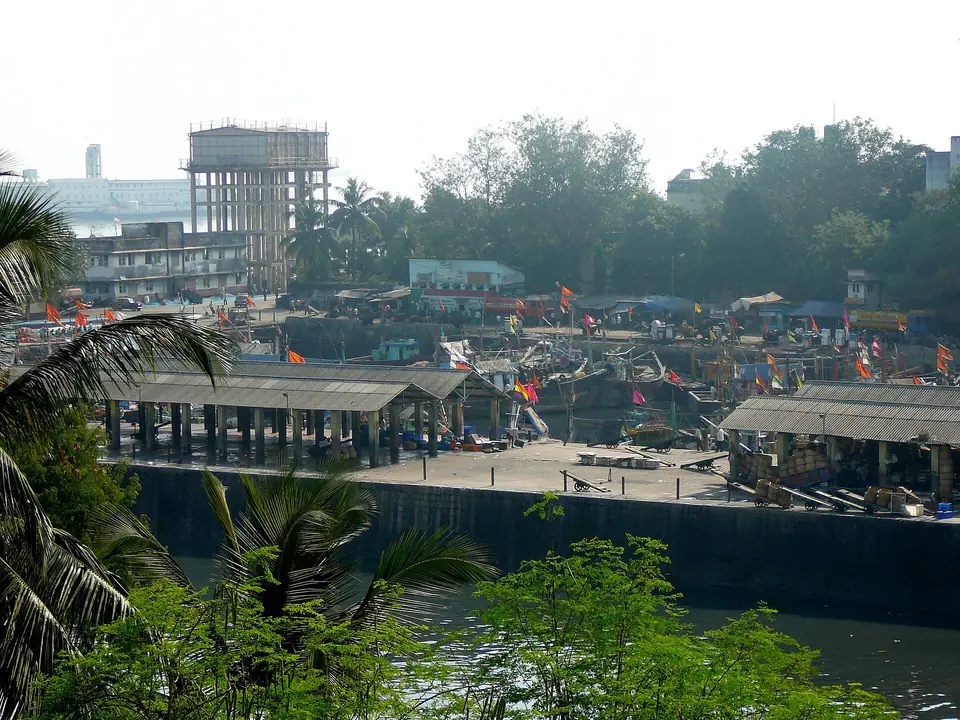
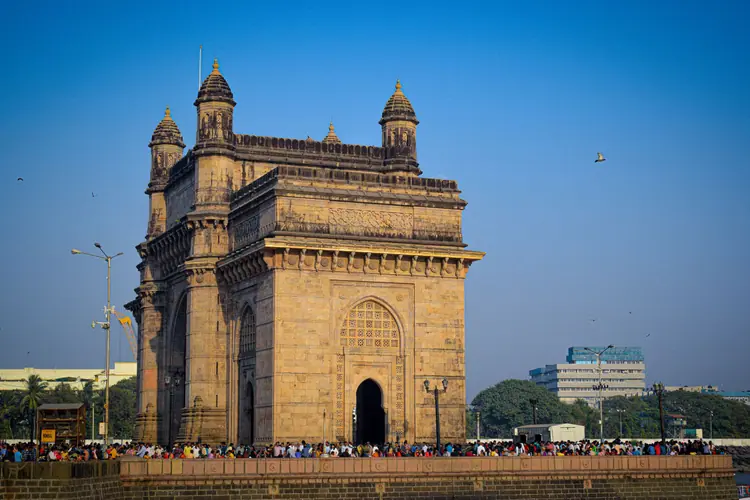
The Gateway of India at Apollo Bunder is the obvious companion stop: the foundation stone was laid in 1913, the arch was completed in 1924, and the Elephanta ferries leave from beside it. Sassoon Dock, built in 1875, is where the Koli fishing boats land their catch at dawn, though photography there may be restricted. Both are a short drive north of the church along the Colaba shore. The walk between them takes you past the harbour water.
The Colaba Causeway market is the busiest stretch nearby, good for clothes, books and street food. Cuffe Parade and Nariman Point give you the sea wall and a long view across the bay, and both are pleasant at sunset. Further north, the Victorian Gothic and Art Deco buildings around the Oval Maidan and Marine Drive form a UNESCO World Heritage Site, listed in 2018; that is a half day on its own.
- Gateway of India: the 1924 arch at Apollo Bunder and the starting point for Elephanta ferries.
- Sassoon Dock: the 1875 dock where fishing boats land at dawn; photography may be restricted.
- Colaba Causeway: a market street of clothes, books, food stalls and pavement sellers.
- Cuffe Parade: a seafront area with a walk along the water and views across the harbour.
Where to stay nearby
Colaba suits a stay built around the church: the Causeway, the Gateway and the waterfront are all within walking distance, and the streets have shops and places to eat at most hours. Cuffe Parade, next door, is quieter and more residential. Both are about 2 km from the church in a straight line. Book ahead in the dry season, when south Mumbai fills up with visitors, and rooms near the water go first.
Further north, the Fort and Kala Ghoda areas put museums, galleries and the Gothic and Art Deco buildings within easy reach, with Churchgate station handy for the Western line. Nariman Point has the seafront and long views across the bay. Wherever you stay, the airport is 22 km away, so allow generous time for a departure and check the traffic before you leave.
Editorial review: 16 November 2026 · imptmumbai.in, written with AI assistance (see the editorial policy).